Why Metallic Hot Stamping Works for Coffee Packaging?
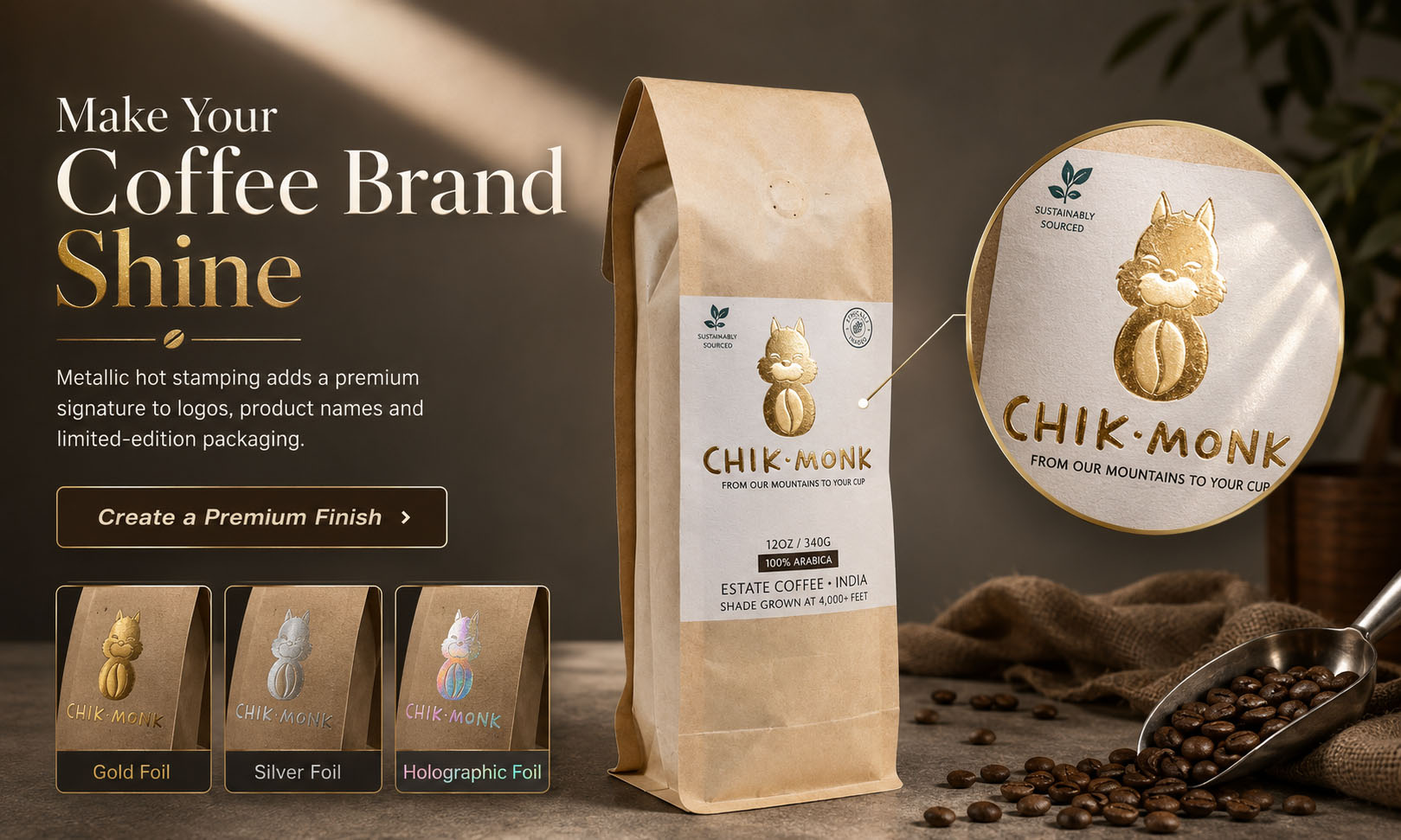
Metallic hot stamping transfers a thin foil layer onto a selected area of the package using controlled heat and pressure. Unlike ordinary metallic ink, foil creates a more reflective finish and produces a noticeable contrast when the bag is viewed from different angles. A plain kraft coffee beans bag may communicate natural sourcing, but it can also look similar to many competing products. Metallic hot stamping helps the brand retain the natural character of kraft while introducing a more distinctive signature. The packaging shown in the accompanying image uses this principle effectively. A neutral kraft body provides the background, while the gold logo and lettering immediately attract attention. The white label keeps the origin, weight and product information readable.
For a yellow bag coffee design, metallic foil can also be used selectively. Gold foil creates a warm tonal combination, while silver foil gives the yellow background a sharper, more contemporary contrast. The final foil color should be tested against the printed bag color rather than selected from a digital screen alone.A premium appearance may bring a customer to the product, but freshness protection determines whether the customer buys it again.
Freshly roasted coffee continues to release carbon dioxide after roasting. A one-way degassing valve allows internal gas to escape while helping limit the entry of external oxygen. Valve release pressure and leakage performance should therefore be evaluated as part of the packaging system, not treated as a purely visual accessory.
A properly specified coffee bag with valve may also include:
1. An oxygen and moisture barrier
2 . A resealable zipper or tin tie
3. Reliable side and bottom seals
4. Suitable puncture resistance
5. Food-contact-compliant inner layers
6. Correct valve placement for the filling process
Barrier requirements may vary between whole beans and ground coffee. A coffee grounds bag must control aroma loss and moisture exposure while also handling finer particles around the zipper and sealing areas.When one artwork is intended for both a coffee bean bag and a coffee grounds bag, the packaging structure should still be reviewed separately. The same external design can be maintained, but product format, filling temperature and expected shelf life may require different technical specifications.
What Makes a Premium Coffee Packaging Bag?
A premium coffee packaging bag is not defined by foil alone. It is the result of coordinated decisions involving material, bag shape, printing, finishing and functional components.
Can the Same Design Be Used for Coffee and Tea?
Some buyers use the search phrase coffee tea bag when looking for coordinated packaging for both roasted coffee and loose-leaf tea.A shared brand style is possible. The same kraft material, typography, foil logo and color system can be applied across both product lines. However, the functional packaging specification may be different.Freshly roasted coffee frequently requires degassing management, while tea packaging is usually more focused on moisture, aroma and light protection. A valve should therefore be selected according to the product rather than added only for visual consistency.
A coordinated coffee-and-tea range can use different foil colors to distinguish categories. For example:
1. Gold for medium or dark roast coffee
2. Silver for light roast coffee
3. Green foil for herbal tea
4. Holographic foil for seasonal products
This creates a recognizable product family without making every SKU look identical.
Not all coffee bag suppliers provide the same level of support for metallic finishing, valve application or bag construction. Custom Metallic Coffee Bags from MST PACK. MST PACK develops custom flexible packaging for coffee roasters, coffee brands, cafés, distributors and private-label programs.
Depending on the design and order requirements, the coffee packaging program can include:
1. Gold, silver or holographic hot stamping
2. Custom printed kraft or film structures
3. Flat-bottom, stand-up or side-gusset formats
4. One-way degassing valves
5. Resealable zippers and tin ties
6. Matte, gloss or soft-touch finishes
7. Packaging for whole beans or ground coffee
8. Retail and foodservice sizes
9. Multiple artwork versions for different origins or roast levels
When buyers search for a coffee package bag, they are often comparing price first. However, the lowest unit cost does not always produce the best result. Poor foil registration, weak seals, incorrect valve placement or insufficient barrier performance can create greater costs after the coffee enters distribution.
MST PACK evaluates the decorative and functional requirements together. The objective is to create a package that looks premium on the shelf, runs reliably during filling and protects the product throughout its intended shelf life.Metallic hot stamping gives coffee brands a practical way to create a premium finish without making the package visually complicated. A focused gold, silver or holographic detail can turn a simple kraft bag into a recognizable brand asset.
The strongest result comes from combining decoration with the correct bag structure, barrier material, closure and degassing system. Whether the project is a 12-ounce retail pouch, a flat bottom coffee bag for a single-origin collection, a coffee grounds bag or a 5 lb bag of coffee for foodservice, the packaging should be developed around both brand presentation and product protection.
A premium finish may help the package attract attention. Reliable performance is what allows the brand to keep that attention.
FAQ
1. Is metallic hot stamping suitable for kraft coffee bags?
Yes. Kraft surfaces create strong contrast with gold, silver and holographic foil. The paper texture and foil adhesion should be tested before production because different surface coatings can affect the final appearance.
2. Does every roasted coffee bag need a valve?
Not necessarily. The need for a valve depends on the roasting, resting, filling and distribution process. Coffee packed shortly after roasting commonly requires a controlled method for releasing carbon dioxide.
3. Can metallic foil be applied to a coffee bag with valve?
Yes. The foil area and valve position should be planned separately so that the valve does not interrupt the logo, product name or other decorative elements.
4. Which format is best for premium retail coffee?
A flat bottom coffee bag provides a stable base, multiple printable panels and a structured shelf appearance. Stand-up and side-gusset bags may also be suitable depending on the filling weight, brand style and packaging equipment.
5. Can MST PACK produce both 12 oz and 5 lb coffee packaging?
Yes. Retail and foodservice sizes can use coordinated artwork, although bag dimensions, material thickness, seals and foil proportions should be adjusted for each filling weight.