

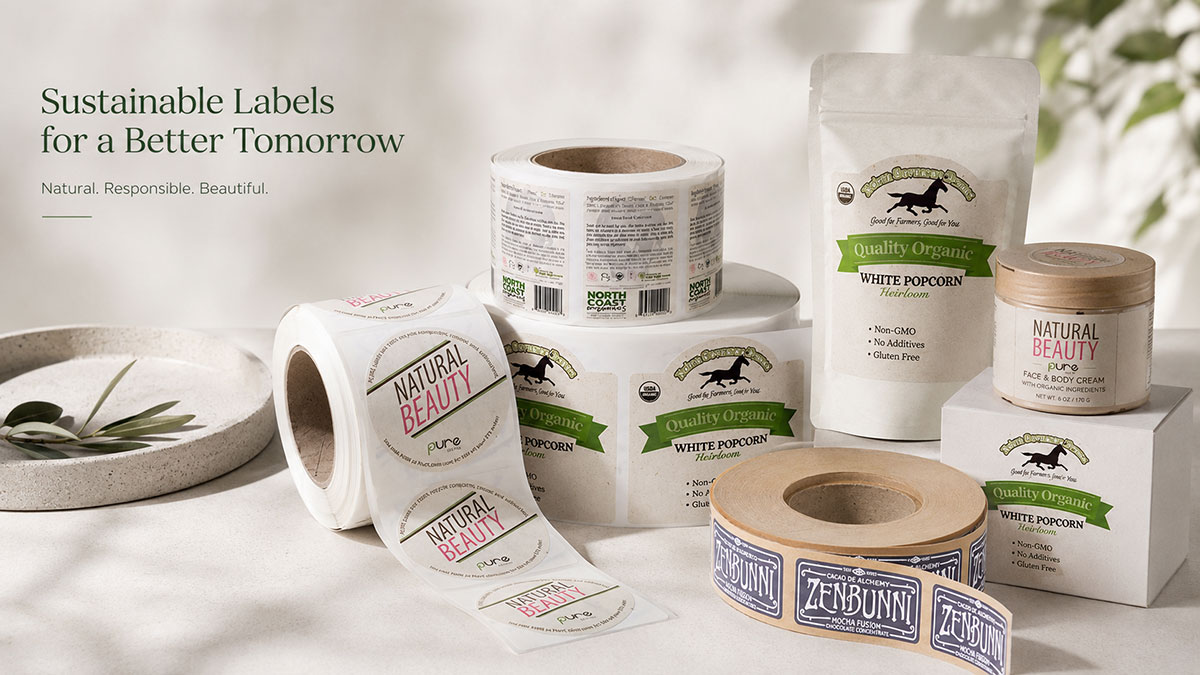
Choosing a sustainable pouch is only part of building environmentally responsible packaging.
The label attached to the pouch also matters.
A recyclable PE bag may become harder to process when it is covered by a large paper label with an incompatible adhesive. A compostable pouch should not be described as fully compostable when the label, ink or adhesive has not been tested for the same disposal conditions.
From our experience working with coffee, snack, pet food, tea and supplement brands, label selection is often left until the final stage of a packaging project. By then, the pouch structure, artwork and environmental claims may already have been confirmed.
This can lead to avoidable problems, including:
- Conflicting disposal instructions
- Unsupported environmental claims
- Poor adhesion during filling or storage
- Label lifting in cold or humid conditions
- Reduced recyclability of the finished package
- Additional material and liner waste
At MSTPACK, we recommend evaluating the pouch, label, printing and intended disposal route as one complete packaging system.
What Makes a Packaging Label Eco-Friendly?
An eco-friendly label is not defined by its appearance.
Brown kraft paper, green graphics and leaf icons may suggest sustainability, but they do not confirm that the label is recyclable, compostable or made with responsibly sourced materials.
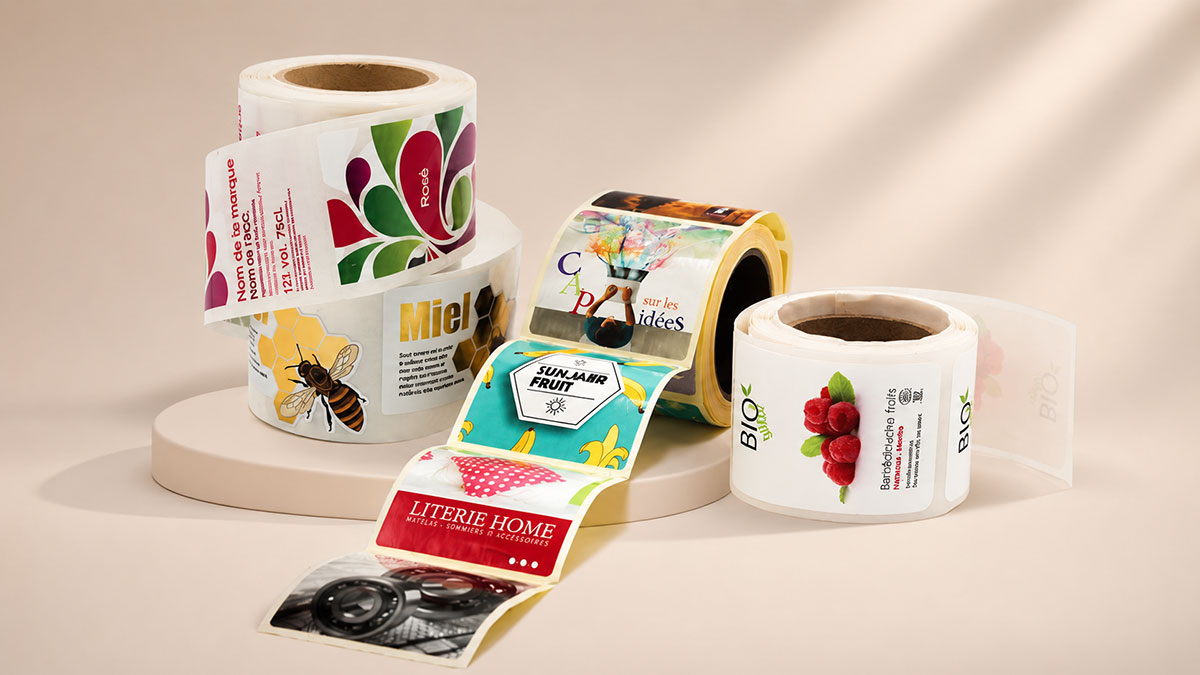
A pressure-sensitive packaging label normally includes four main elements:
- The printable face material
- Printing ink and optional coating
- Adhesive
- Release liner
Each component affects the environmental performance of the label.
A paper label may use renewable fiber, but it can still contain a plastic coating or an adhesive that is difficult to separate. A compostable film label may be appropriate for one industrial composting system but unsuitable for home composting. A plastic label may appear less sustainable but offer better material compatibility with a mono-PE recyclable pouch.
The right label is therefore the one that performs reliably and supports the intended end-of-life route of the package.
The Adhesive Is Just as Important as the Label
Adhesives are often overlooked in sustainable label selection.
In practice, the adhesive determines whether the label stays attached during production, transport, retail display and consumer use.
A label that lifts from the pouch or becomes unreadable can lead to rework, product rejection and unnecessary waste.
Terms such as “water-based adhesive” also require context. A water-based formulation is not automatically recyclable, compostable or suitable for food packaging.
For compostable packaging, the adhesive should be included in the compostability assessment. For recyclable packaging, it should be compatible with the intended recycling process as far as reasonably possible.
Match the Label to the Disposal Route
The strongest sustainable packaging projects usually communicate one clear end-of-life route.
Labels for Recyclable Pouches
For recyclable flexible packaging, the label should not unnecessarily disrupt the recycling stream.
Direct printing can remove the need for a separate face stock, adhesive and release liner. It may be suitable for stable, higher-volume products.
Applied labels remain useful for lower quantities, product testing, multiple flavors, seasonal products and frequently changing information.
The more sustainable option depends on total material use, order volume, inventory risk and the likelihood of obsolete packaging.
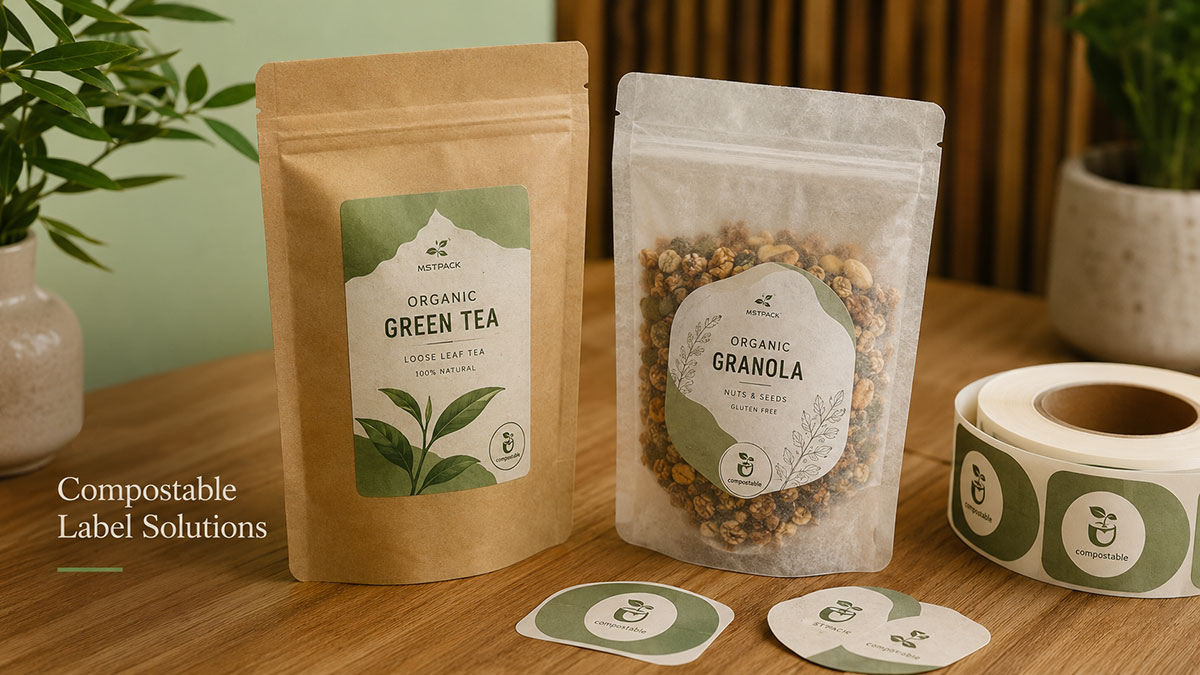
Labels for Compostable Pouches
A compostable packaging claim should be based on the complete package.
Brands should also distinguish clearly between industrial composting and home composting.
Industrial compostable packaging should not be promoted as home compostable unless the finished package has appropriate supporting evidence.
Labels for Paper-Based Packaging
Paper-based flexible packaging can vary significantly.
Some pouches are designed for paper recycling, while others use plastic or aluminum barrier layers that affect their end-of-life route.
Printed Packaging or Applied Labels?
This decision should be based on the whole project rather than the cost of one label.
Applied labels are often suitable when:
- Quantities are low
- Product information changes regularly
- Several SKUs use the same pouch
- A product is being tested
- Seasonal designs are required
- Variable data is needed
Direct printing may be more suitable when:
- Volumes are stable
- Artwork changes are limited
- The label would cover a large area
- The brand wants to reduce liner waste
- Mono-material compatibility is a priority
- Automated packing efficiency is important
For many emerging brands, using one standard pouch with several labels can reduce obsolete stock. For established products, custom printed pouches may lower material use and improve production efficiency.
Frequently Asked Questions
Are paper labels always more sustainable?
No. A paper label may use renewable fiber, but it can interfere with the recycling of a plastic pouch. A compatible PE label may be a better choice for mono-PE packaging.
Can paper labels be used on recyclable PE pouches?
Yes, but the label size, adhesive and local recycling process should be considered. For stronger mono-material compatibility, a PE label or direct printing may be preferred.
What label should be used on a compostable pouch?
The label face, adhesive, ink and coating should be suitable for the same composting route as the pouch. The complete packaging configuration should be reviewed before making a compostable claim.
Is biodegradable the same as compostable?
No. Compostable materials are assessed under defined conditions. Biodegradable is a broader term that does not clearly state the disposal environment or timeframe.
Are water-based inks automatically sustainable?
No. Water-based inks may offer certain production advantages, but their environmental suitability still depends on formulation, print performance, food-packaging requirements and end-of-life compatibility.
Can sustainable labels be custom printed?
Yes. Labels can be customized by shape, size, artwork, finish and adhesive type. Digital printing is often suitable for short runs and multiple SKUs.
Should a brand use labels or directly printed pouches?
Labels are useful for lower quantities and frequently changing products. Direct printing is often more efficient for stable, higher-volume orders. Inventory waste and material compatibility should be included in the decision.
Final Thoughts
An eco-friendly label should do more than support a sustainable visual style.
It should remain attached, protect required information, suit the packaged product and work with the intended recycling, composting or reuse route.
The most reliable approach is to evaluate the complete structure:
pouch material + label face + adhesive + ink + coating + packaging accessories.
When these elements are developed together, brands can make clearer environmental claims, reduce packaging mistakes and create a more practical route toward sustainable packaging.
Planning a Sustainable Packaging Project?