

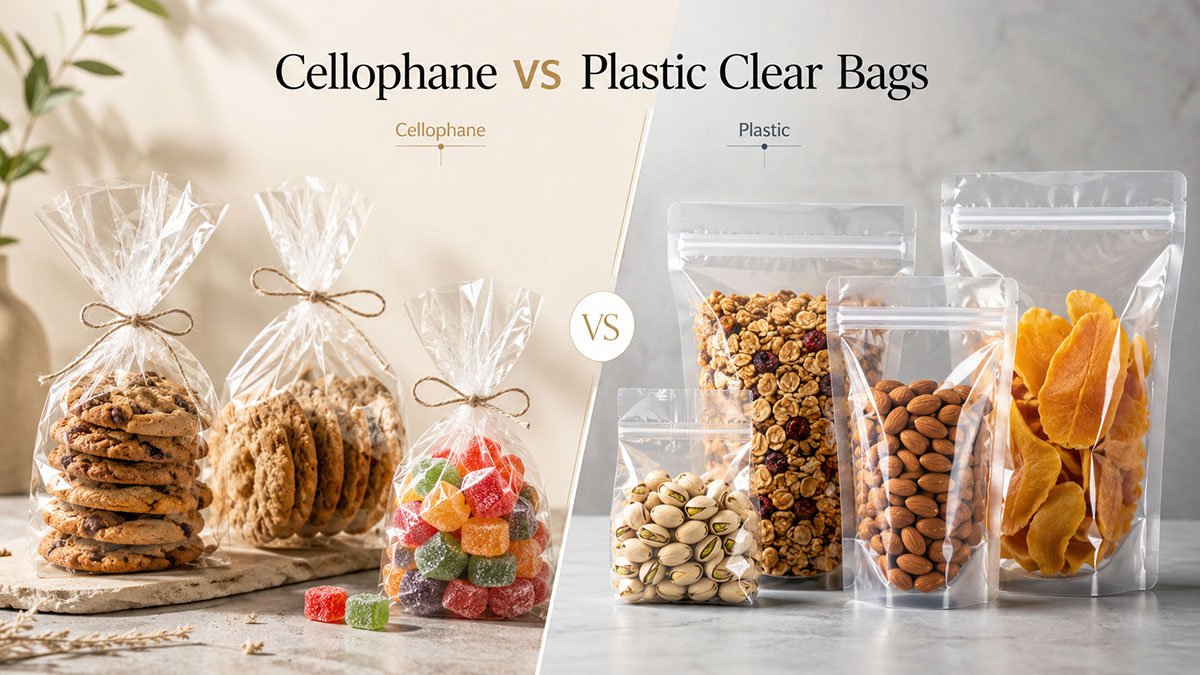
Clear bags are simple at first glance. They show the product, keep the pack clean, and help food look fresh on the shelf. But when buyers ask for “cellophane bags” or “plastic clear bags,” they are often talking about very different packaging materials.
At MSTPACK, we see this question often from bakery brands, candy companies, snack manufacturers, tea suppliers, gift food brands, and distributors. Some customers want a clear bag because they like the premium transparent look. Others are looking for compostable clear packaging, recyclable clear bags, or a lower-cost food-safe plastic bag for daily production.
The difference matters because material choice affects shelf life, sealing, moisture resistance, compostability, recyclability, printing quality, MOQ, cost, and even the environmental claim printed on the package.
The Short Answer
Cellophane bags are made from regenerated cellulose, usually derived from plant-based sources such as wood pulp. They are known for their crisp touch, high transparency, and natural material background.
Plastic clear bags are usually made from polymer films, such as BOPP, PP, PE, PET, or laminated plastic structures. They are widely used because they provide strong moisture resistance, easy sealing, durability, and cost efficiency.
So the real question is not simply “Which one is better?” The better question is:
Which clear bag structure is right for your food product, shelf life, packing method, sustainability claim, and target market?
That is the way MSTPACK normally helps customers make the decision.
What Are Cellophane Bags?
Cellophane bags are transparent bags made from regenerated cellulose film. They are often chosen for products that need a clean, natural, and premium display appearance.
They usually feel crisp rather than soft. When you touch a true cellophane bag, it has a more paper-like texture compared with many plastic clear bags. This is one reason why cellophane is popular for gift food packaging, handmade bakery items, candy, and seasonal retail packs.
For brands that want a natural-looking clear bag, cellophane can be attractive. However, buyers should understand one important point: not every cellophane bag is automatically compostable. Coatings, inks, adhesives, labels, or closures can change the final environmental performance.
What Are Plastic Clear Bags?
Plastic clear bags are made from transparent plastic films such as BOPP, PP, PE, PET, or laminated plastic materials. They are used across almost every food packaging category because they are stable, efficient, and flexible in production.
For food brands, plastic clear bags are often selected when the product needs better moisture protection, stronger sealing, or longer shelf life.
BOPP clear bags are especially common for cookies, candy, bakery products, and snack packaging because they offer excellent transparency, good stiffness, and better moisture resistance than many cellulose-based films.
PE clear bags are softer and more flexible. PET-based laminated bags can provide better strength and barrier when used in multilayer food packaging.
Main Difference Between Cellophane and Plastic Clear Bags
The biggest difference is the base material.
Cellophane comes from regenerated cellulose. Plastic clear bags come from synthetic polymer films or engineered packaging films.
From a buyer’s point of view, the difference shows up in five areas:
1. Material Source
Cellophane has a cellulose-based origin. Plastic clear bags are usually made from PP, PE, PET, BOPP, or other polymer films.
If your brand wants a natural material story, cellophane may fit better. If your product needs stronger technical performance, plastic film may be more practical.
2. Moisture Barrier
This is one of the most important packaging differences.
Cellophane can look beautiful, but it is generally more sensitive to moisture. For short-shelf-life bakery items, candy, or dry gift foods, it may work well.
For snacks, dried fruit, granola, pet treats, or products that lose quality when exposed to humidity, plastic clear bags often perform better.
3. Sealing Performance
Plastic clear bags are usually easier to heat seal and run on packing machines. This makes them suitable for large-volume production, automatic filling lines, and consistent sealing quality.
Cellophane may need specific coatings or sealing conditions. If the wrong structure is selected, sealing problems can happen.
4. Sustainability Claim
Cellophane can support a more natural or compostable packaging direction, but only when the full structure is verified.
Plastic clear bags can also support sustainability goals when designed as recyclable mono-material PE or PP packaging.
5. Cost and Production Efficiency
In most cases, standard plastic clear bags are more cost-effective than true cellophane bags. Plastic films also offer more stable supply, more structure choices, and better compatibility with printing and automated production.
Cellophane may cost more, but it can help certain brands create a more premium or natural shelf impression.
Which Bag Is Better for Food Packaging?
There is no single answer. The right choice depends on your product.
For handmade cookies, candies, chocolate gifts, tea, herbs, and seasonal gift foods, cellophane bags can create a clean and premium look. They are especially suitable when product visibility and natural presentation are more important than long shelf life.
For snacks, nuts, dried fruit, granola, pet treats, frozen products, and high-volume retail food, plastic clear bags are often more practical. They offer better moisture resistance, stronger sealing, and more reliable performance during storage and shipping.
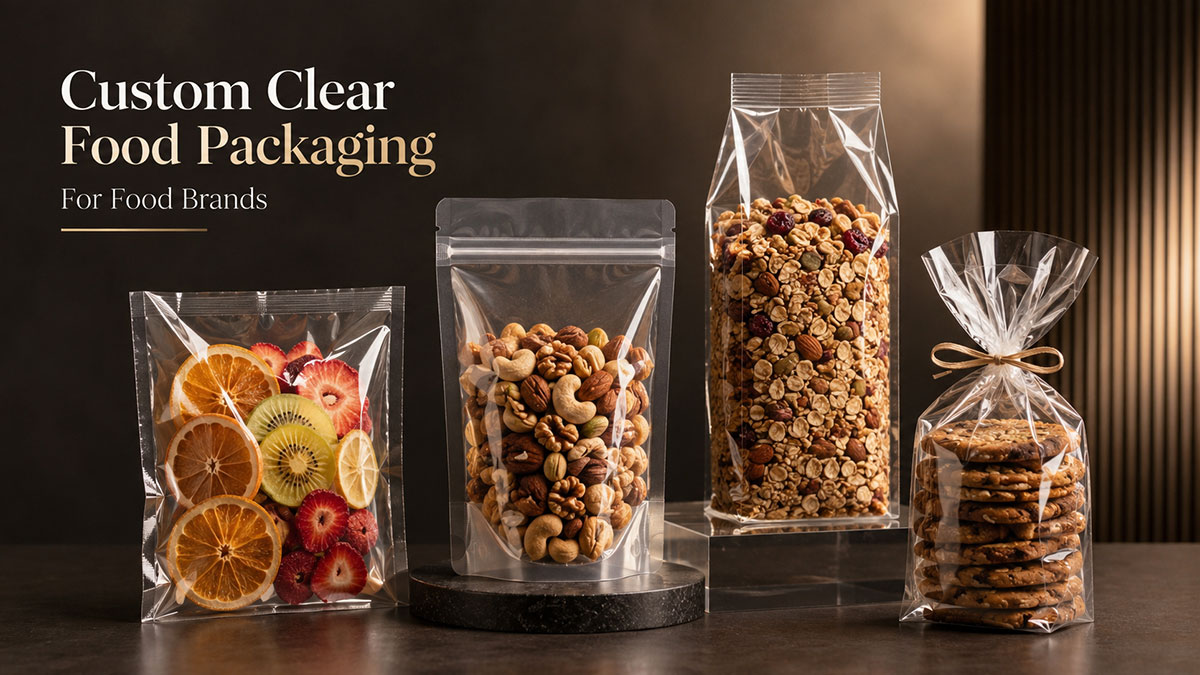
For brands focused on sustainability, there are also other options besides traditional cellophane and standard plastic. MSTPACK can support compostable clear bags, recyclable clear pouches, and custom clear food packaging structures depending on the product requirements.
What About Compostable Clear Bags?
Many brands today want clear packaging but also want to reduce conventional plastic use. This is where compostable clear bags become important.
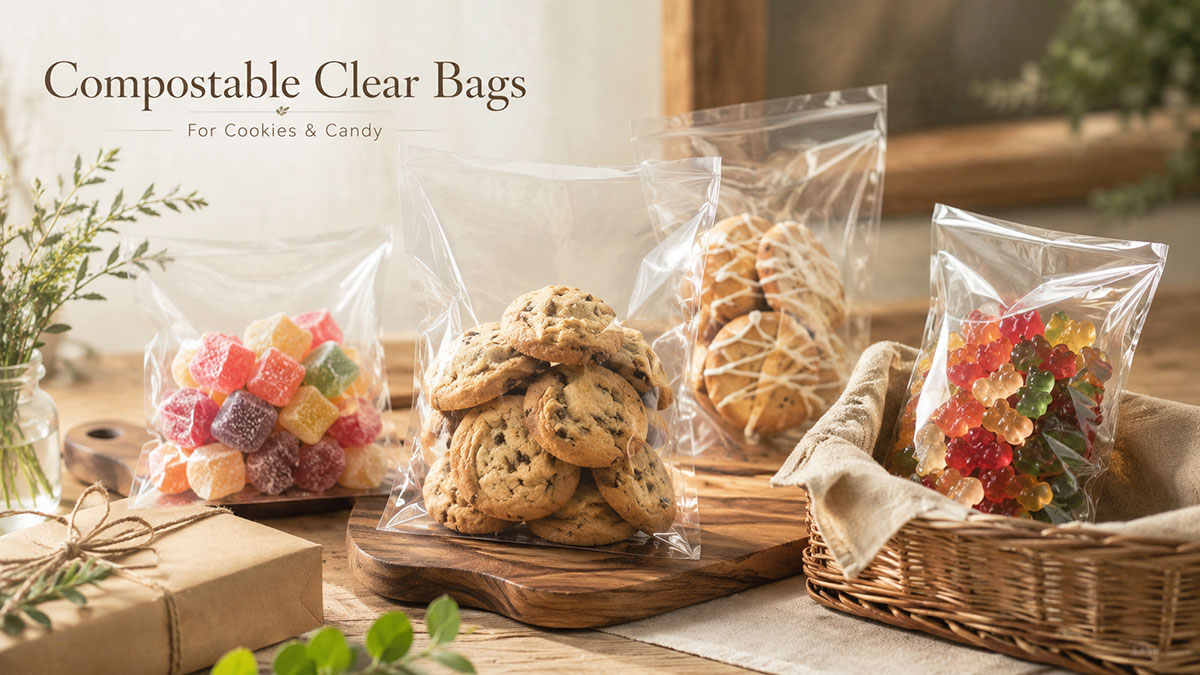
A compostable clear bag may use cellulose-based film or other certified compostable materials. However, the full structure must be reviewed carefully. The film, ink, adhesive, zipper, label, and any coating should match the intended certification and disposal route.
Buyer’s Recommendation from MSTPACK
If your product is a handmade cookie, candy, gift food, tea, or dry bakery item, cellophane bags may be a good option for premium product display.
If your product is a snack, dried fruit, granola, frozen food, pet treat, or moisture-sensitive food, plastic clear bags are usually the safer choice.
If your brand wants sustainable clear packaging, do not choose material based only on the word “cellophane” or “biodegradable.” Ask for the full structure, certification scope, sealing performance, and shelf-life suitability.
The best clear bag should help your product sell better, protect better, and support your brand claim without creating compliance risk.
FAQ
Is cellophane the same as plastic?
No. True cellophane is made from regenerated cellulose, while plastic clear bags are usually made from PP, PE, PET, BOPP, or other plastic films.
Are cellophane bags compostable?
Some cellophane bags can be compostable, but not all. The full finished bag structure must be checked, including coating, ink, adhesive, label, and closure.
Are plastic clear bags recyclable?
Some plastic clear bags can be recyclable, especially mono-material PE or PP structures. Multi-layer laminated bags are usually harder to recycle.
Which is better for cookie packaging?
For short-shelf-life handmade cookies, cellophane bags or BOPP clear bags can both work. If moisture resistance and longer shelf life are important, BOPP or laminated clear bags are usually more stable.
Which is better for candy packaging?
Both cellophane and plastic clear bags are common for candy. Cellophane gives a crisp premium look, while BOPP or PP bags offer better sealing efficiency and cost control.
Can MSTPACK make custom printed clear bags?
Yes. MSTPACK can produce custom printed clear bags, clear stand-up pouches, clear gusseted bags, clear zipper bags, recyclable clear bags, and compostable clear bags for food packaging projects.
Can I use compostable clear bags for food packaging?
Yes, but the material should match the product’s shelf-life and barrier requirements. For compostable claims, buyers should confirm the certification and finished bag structure before mass production.
What is the best clear bag for snacks?
For snacks, BOPP, PE, PET/PE, or recyclable mono-material structures are commonly recommended because they provide better moisture resistance and sealing performance.
Cellophane bags and plastic clear bags may look similar, but they serve different packaging needs.
Cellophane bags offer a crisp, transparent, and natural-looking presentation. They are suitable for premium bakery, candy, gift food, and dry retail products.
Plastic clear bags offer better moisture resistance, sealing performance, production efficiency, and cost control. They are often better for snacks, frozen food, dried fruit, pet treats, and large-volume food packaging.
For food brands, the right choice should be based on product protection, shelf life, packing method, sustainability claim, and target market—not only on appearance.
MSTPACK helps food brands and distributors develop custom clear bags that balance product visibility, packaging performance, sustainability goals, and commercial cost.
Need help choosing the right clear bag for your product? Send us your product type, bag size, packing method, target market, and sustainability requirements. MSTPACK will recommend a suitable clear packaging structure for your project.
Cellophane bags are made from regenerated cellulose and are often used for premium transparent packaging such as cookies, candy, bakery items, tea, and gift foods. Plastic clear bags are usually made from BOPP, PP, PE, PET, or laminated films and are commonly used for snacks, frozen food, dried fruit, pet treats, and high-volume retail food packaging. Cellophane offers a crisp natural look, while plastic clear bags usually provide better moisture resistance, sealing performance, cost efficiency, and production stability. Compostable or recyclable claims depend on the full finished packaging structure, not only the base material. MSTPACK recommends choosing clear bags based on product type, shelf life, packing method, sustainability goal, and target market.