
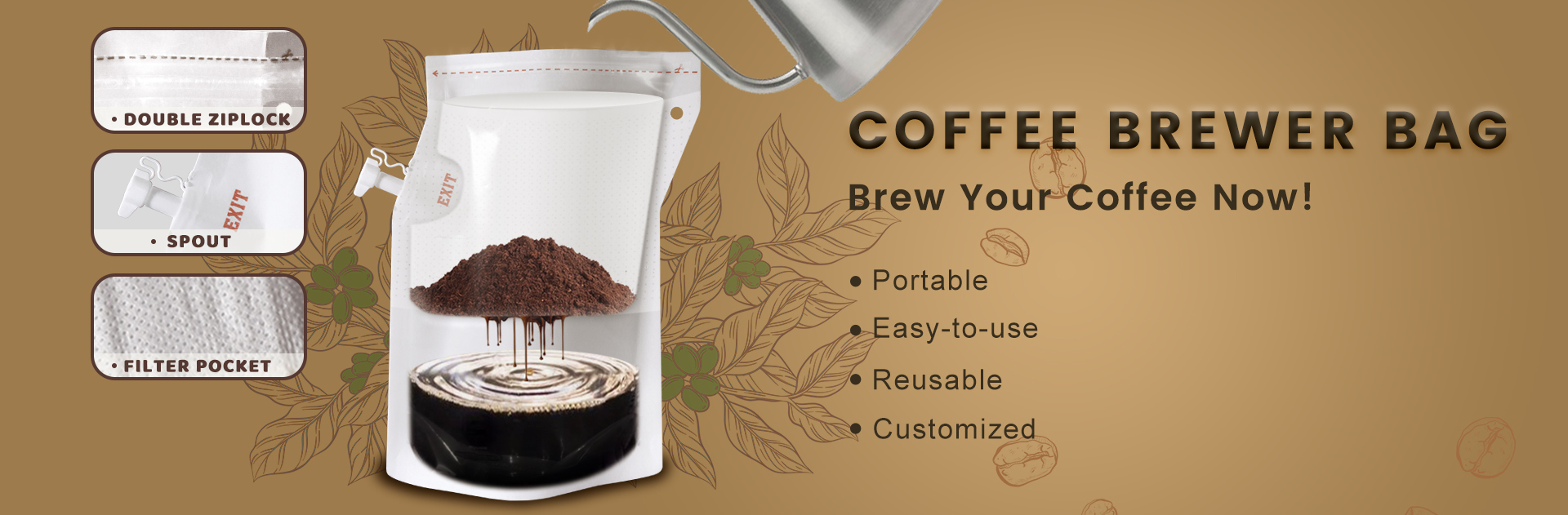
For coffee roasters, private-label brands and beverage companies, cold brew bags provide a way to enter the cold coffee category without relying entirely on bottled ready-to-drink products. They also create opportunities for sample packs, subscriptions, seasonal flavors and premium brewing kits.
However, a successful cold brew product depends on more than putting ground coffee into a filter. Coffee freshness, filter strength, extraction performance and outer packaging all affect the final consumer experience.
What Is a Cold Brew Coffee Bag?
A cold brew coffee bag is a porous filter pouch filled with ground coffee and designed to steep in cold or room-temperature water. It works in a similar way to a large tea bag. The consumer places the bag in a bottle, jar or brewing container, adds water and allows the coffee to extract over several hours. After brewing, the filter bag can be removed without the need for separate coffee filters or complicated equipment.
A complete cold brew coffee bag product normally includes:
1. A food-grade inner filter bag
2. A measured portion of ground coffee
3. A sealed outer packaging pouch
4. Brewing instructions
5. Optional retail carton or multipack bag
The inner filter controls water flow and prevents excessive coffee sediment from entering the beverage. The outer pouch protects the coffee from oxygen, moisture, odors and handling contamination before use.
Why Cold Brew Coffee Bags Are Gaining Attention?
Cold coffee products continue to expand beyond traditional café menus. Consumers increasingly expect coffee products to fit different occasions, including home preparation, office use, travel and outdoor activities.A pre-portioned cold brew bag addresses several barriers associated with making cold brew at home.
Traditional preparation often requires the consumer to measure coffee, select the correct grind size, find a suitable filter and clean wet coffee grounds after brewing. A ready-to-use bag simplifies these steps and makes the result easier to repeat.
What Makes a Good Cold Brew Filter Bag?
The filter material is one of the most important parts of the product. It must remain stable during a long extraction period while allowing water to move through the coffee grounds.
A suitable cold brew filter bag should provide:
1. Reliable wet strength
2. Controlled water permeability
3. Effective retention of coffee particles
4. Food-contact suitability
5. Strong sealed edges
6 Neutral odor and taste
7 Sufficient capacity for coffee expansion
8 Easy removal after brewing
If the material is too open, fine coffee particles may pass into the drink. If it is too restrictive, extraction may become slow or uneven. The bag dimensions must also allow the coffee grounds to hydrate and move. Overfilling a small filter can restrict water circulation and affect extraction.
Opportunities for Coffee Roasters and Private-Label Brands
Cold brew coffee bags can help roasters extend their product range beyond traditional whole-bean and ground coffee bags.
Potential product concepts include:
1. Single-origin cold brew bags
2.Cold brew concentrate bags
3. Decaffeinated cold brew
4. Flavored cold brew blends
5. Organic coffee bags
6. Functional coffee blends
7. Coffee and fruit combinations
8. Cold brew gift sets
9. Office coffee multipacks
10. Travel cold brew kits
11. Private-label cold brew bags
The format can also support seasonal launches. Brands may introduce lighter fruit-forward coffees during summer and chocolate or nut-forward blends during cooler months.
Because the product is dry before brewing, it can be suitable for online retail and international distribution, subject to applicable food and labeling requirements.
Common Packaging Mistakes to Avoid
1. Selecting the filter before confirming the coffee dose
The bag must provide enough internal space for coffee hydration and water movement.
2. Using weak filter seals
Cold brew bags remain wet for several hours. Seal strength must be evaluated under actual brewing conditions.
3.Ignoring the outer barrier pouch
A visually attractive outer pack may still perform poorly if it does not protect ground coffee from oxygen and moisture.
4.Providing unclear brewing instructions
Consumers may receive inconsistent results if water volume and brewing time are not clearly stated.
5.Making unsupported sustainability claims
Recyclable, compostable and bio-based materials describe different characteristics. Claims should match the actual packaging structure and disposal conditions.
6.Skipping production-line testing
Film thickness, coefficient of friction, sealing temperature and pouch dimensions can affect automatic packing performance.
For coffee brands, the opportunity is not simply to place ground coffee in a filter. The complete product must connect coffee quality, extraction design, protective packaging, clear instructions and responsible material selection.
When these elements work together, a cold brew coffee bag can become a credible specialty coffee product rather than a short-term packaging novelty.The cold brew coffee bag reflects a broader shift toward convenient, customizable and at-home specialty coffee experiences.
It gives consumers a simple way to prepare cold brew without additional equipment, while giving coffee brands a lightweight format for retail, subscriptions, sampling and e-commerce.The most effective packaging solution combines a strong food-grade filter bag with an outer pouch that protects aroma, controls moisture and communicates the brewing method clearly.
MSTPACK develops custom cold brew coffee bag packaging, individual outer sachets, resealable multipacks, flat-bottom pouches and printed roll stock for coffee brands and private-label projects.
By evaluating the coffee dose, grind size, target shelf life and packing process, brands can create cold brew packaging that performs reliably from production to the final cup.
FAQ
1. What is a cold brew coffee bag?
A cold brew coffee bag is a filter pouch filled with ground coffee. It is placed in water and steeped for several hours to prepare cold brew without separate filtering equipment.
2. Does a cold brew coffee bag need outer packaging?
In most retail applications, yes. A sealed outer pouch helps protect the ground coffee from oxygen, moisture, odors and contamination before brewing.
3. What material is used for cold brew filter bags?
Cold brew filter bags may use food-grade nonwoven, mesh or plant-based filter materials. The selected material should provide wet strength, suitable permeability and effective coffee particle retention.
4. Can cold brew coffee bags be individually wrapped?
Yes. Individual sachets are suitable for samples, travel packs, hotels, offices, gift sets and single-serving products.
5. Are recyclable cold brew coffee bags available?
Recyclable outer pouches may be available for selected products. The filter bag and outer pouch should be evaluated separately because they may use different materials and disposal methods.
6. Can cold brew coffee bag packaging be custom printed?
Yes. Outer sachets, stand-up pouches, flat-bottom bags, cartons and roll stock can be customized with brand artwork, brewing instructions, QR codes and product information.
7. How should a coffee brand choose the right cold brew bag size?
The size depends on the coffee dose, grind size, required water circulation and target brewing volume. The filter should have enough space for the grounds to hydrate without becoming tightly compressed.