
What Is Cold Seal Film?
Cold seal film is a type of flexible packaging film coated with a pressure-sensitive cold seal adhesive. The adhesive is usually applied to specific sealing areas of the inner layer. During packaging, when two coated surfaces are pressed together, they bond without heat.
In simple terms: Cold seal film = printed or laminated flexible film + cold seal adhesive coating + pressure sealing process.
Why Cold Seal Packaging Is Growing in Food and Snack Packaging?
The demand for cold seal packaging is not accidental. Brands are under pressure to increase production efficiency, reduce packaging defects and improve product presentation. Cold seal film solves several practical problems at the same time.
First, it improves packing speed. Since the sealing process does not need heating and cooling time, cold seal packaging can run efficiently on high-speed flow wrapping lines. For factories packing large volumes of chocolate bars or snack bars, this directly improves output.Second, it protects heat-sensitive products. Chocolate, coated bars and ice cream products are sensitive to temperature. Heat sealing may cause surface melting, deformation, fat bloom risk or poor appearance. Cold seal film avoids this by sealing through pressure rather than heat.Third, it reduces seal-related defects. Heat seal packaging requires stable temperature, pressure and dwell time. If one factor is unstable, the seal may become weak, burned, wrinkled or inconsistent. Cold seal packaging simplifies the sealing process and helps maintain more stable production.Fourth, it improves consumer opening experience. A well-designed cold seal wrapper can be easy to open while still providing reliable protection during storage, transport and retail display.
Cold Seal Film vs Heat Seal Film: Which One Is Better?
Cold seal film and heat seal film are not simply “better” or “worse”. They are used for different packaging needs.Heat seal film is suitable for many standard food products, dry goods and general flexible packaging applications. It usually provides strong sealing performance and can be cost-effective for many formats.Cold seal film is more suitable when the product cannot tolerate heat, or when the production line requires very high packing speed. It is especially valuable for chocolate cold seal packaging, bar wraps and coated snack products.
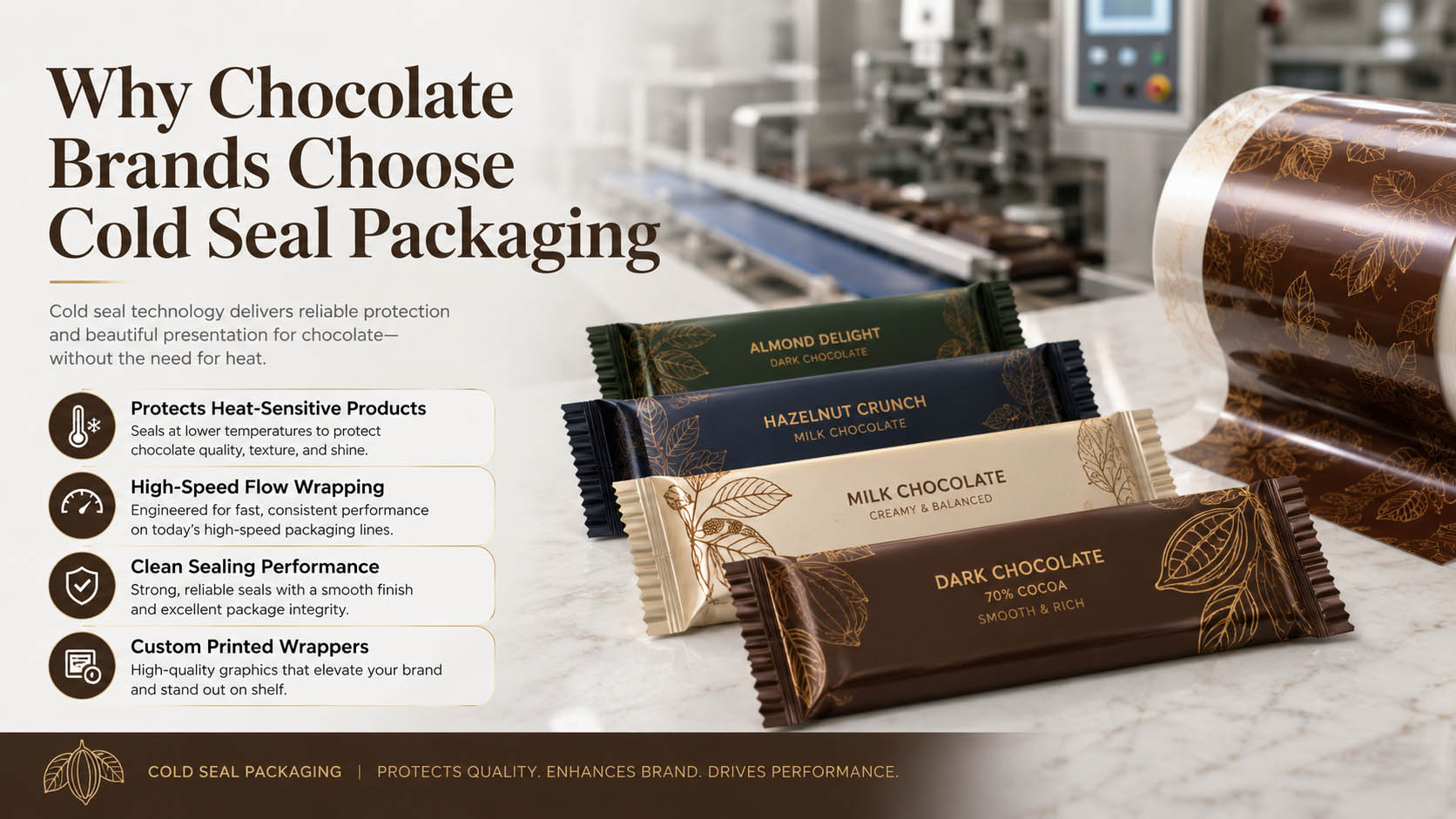
Why Chocolate Brands Prefer Chocolate Cold Seal Film?
Chocolate is one of the most typical applications for cold seal packaging. During packing, chocolate can be affected by temperature, pressure and humidity. If the wrapper requires high heat to seal, the chocolate surface may soften or become marked. In premium chocolate packaging, even a small surface defect can affect consumer perception.
Chocolate cold seal film helps avoid this issue. Since the seal is formed by pressure, the film can be wrapped around chocolate bars without applying heat to the product area. This helps maintain the product’s shape, surface finish and retail appearance.
For brands focusing on sustainability, recyclable or paper-based cold seal film options can also be developed depending on sealing performance, machine compatibility and local recycling requirements.
Applications of Cold Seal Packaging
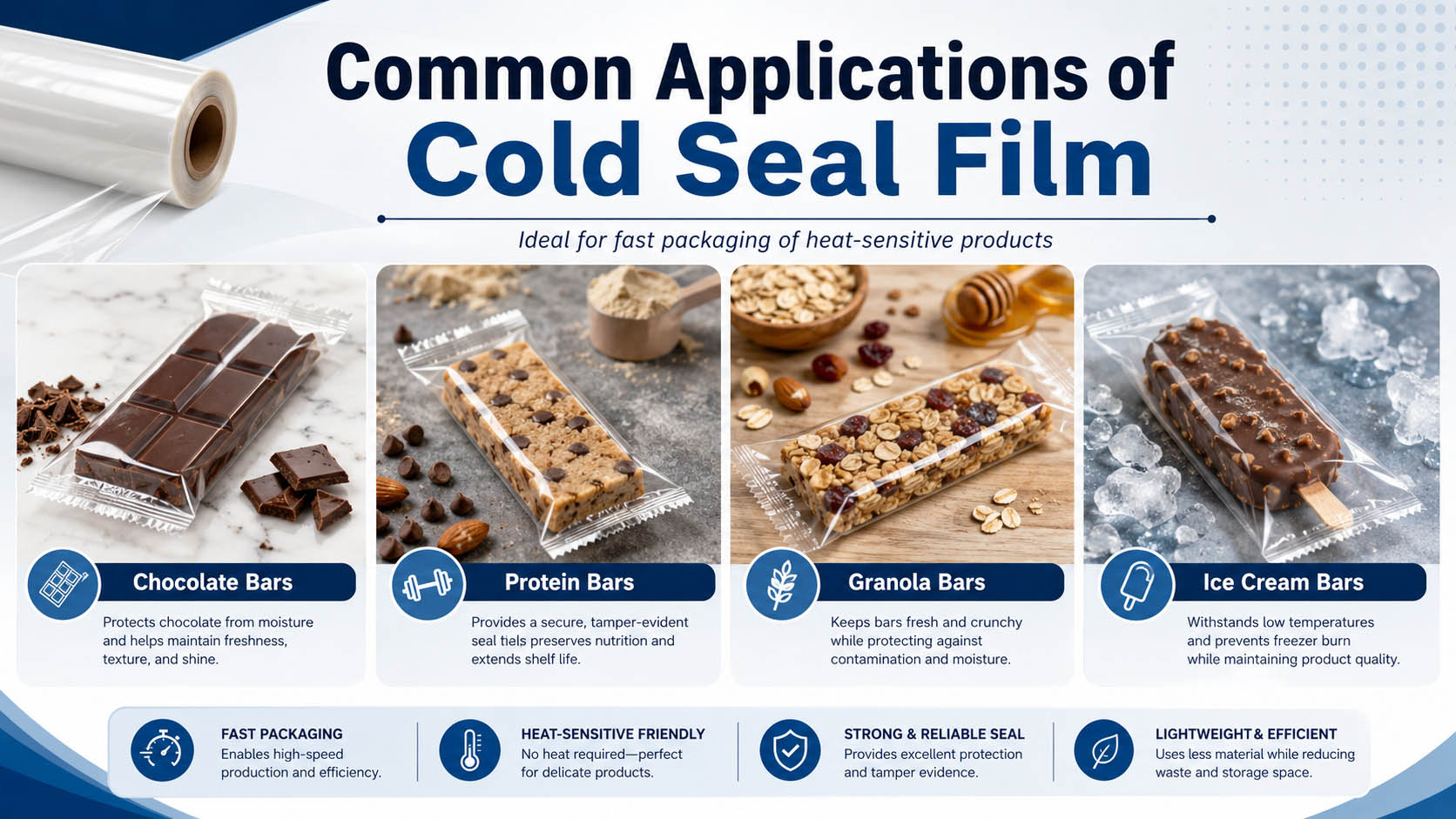
Cold seal packaging is widely used in industries where speed, clean sealing and product protection are important.
1. Chocolate Cold Seal Packaging
Used for chocolate bars, coated wafers, praline bars and chocolate snack products. It helps prevent heat-related damage and supports premium retail appearance.
2. Protein Bar and Energy Bar Packaging
Protein bars often contain chocolate coating, nuts, caramel, fruit or functional ingredients. Cold seal film protects product shape and supports fast wrapping.
3. Granola and Cereal Bar Packaging
Granola bars and cereal bars require reliable sealing and moisture protection. Cold seal packaging helps maintain texture and shelf appeal.
4. Ice Cream Bar Packaging
Cold seal film is suitable for frozen and chilled products where heat sealing may not be ideal near the product.
5. Bakery and Biscuit Packaging
Cold seal packaging can be used for single-serve bakery snacks, cookies and coated biscuits that need quick packing and easy opening.
6. Medical and Hygiene Packaging
Some medical or hygiene products also use cold seal structures when clean, fast and heat-free sealing is required.
How to Customize Cold Seal Film for Your Product?
A professional packaging supplier should not recommend one structure for every customer. Cold seal film should be developed according to the product and packing condition.
Before customization, brands should prepare the following information:
1. Product type
2. Product size and weight
3. Packaging style, such as flow wrap or sachet
4. Required shelf life
5. Storage condition
6. Target market
7. Packing machine model and speed
8. Current film structure, if available
9. Printing design and roll direction
10. Required certifications or food contact standard
For chocolate cold seal film, it is also useful to know whether the product contains nuts, cream filling, wafer, caramel, fruit, high fat content or coating. These details affect barrier selection and film performance.Cold seal film is becoming a preferred packaging solution for brands that need speed, product protection and stable sealing performance. It is especially valuable for chocolate cold seal packaging, protein bar packaging, granola bar packaging and other heat-sensitive applications.
For brand owners, the best cold seal packaging is not only attractive on shelf. It should run smoothly on machines, protect the product, reduce waste and support the brand’s growth.
If you are developing chocolate cold seal film, cold seal packaging film or custom printed cold seal wrappers, the most important step is to match the film structure with your product, machine and shelf life target. A well-designed cold seal film can make packaging faster, cleaner and more reliable.
FAQ About Cold Seal Film
1. What is cold seal film?
Cold seal film is a flexible packaging film coated with a pressure-sensitive adhesive. It seals under pressure without using heat, making it suitable for heat-sensitive products.
2. What is cold seal packaging used for?
Cold seal packaging is commonly used for chocolate bars, protein bars, energy bars, granola bars, cereal bars, candy bars, ice cream bars and selected medical or hygiene products.
3. Why is cold seal film suitable for chocolate packaging?
Chocolate is sensitive to heat. Cold seal film allows the package to be sealed without applying high temperature, helping reduce melting, deformation and surface damage during packing.
4. Is cold seal film better than heat seal film?
It depends on the product. Cold seal film is better for high-speed packing and heat-sensitive products. Heat seal film is suitable for many general packaging applications where heat does not damage the product.
5. Can cold seal film be custom printed?
Yes. Cold seal film can be custom printed with brand graphics, product information, matte or gloss finish, metallic effects and different roll directions for automatic packing machines.
6. Can cold seal film be recyclable?
Some cold seal film structures can be designed with recyclable or mono-material options, but recyclability depends on the film structure, adhesive system and local recycling rules.
7. What information is needed before ordering cold seal film?
You should provide product type, product size, packing machine details, required shelf life, target market, roll width, film structure if available, printing artwork and expected order quantity.