

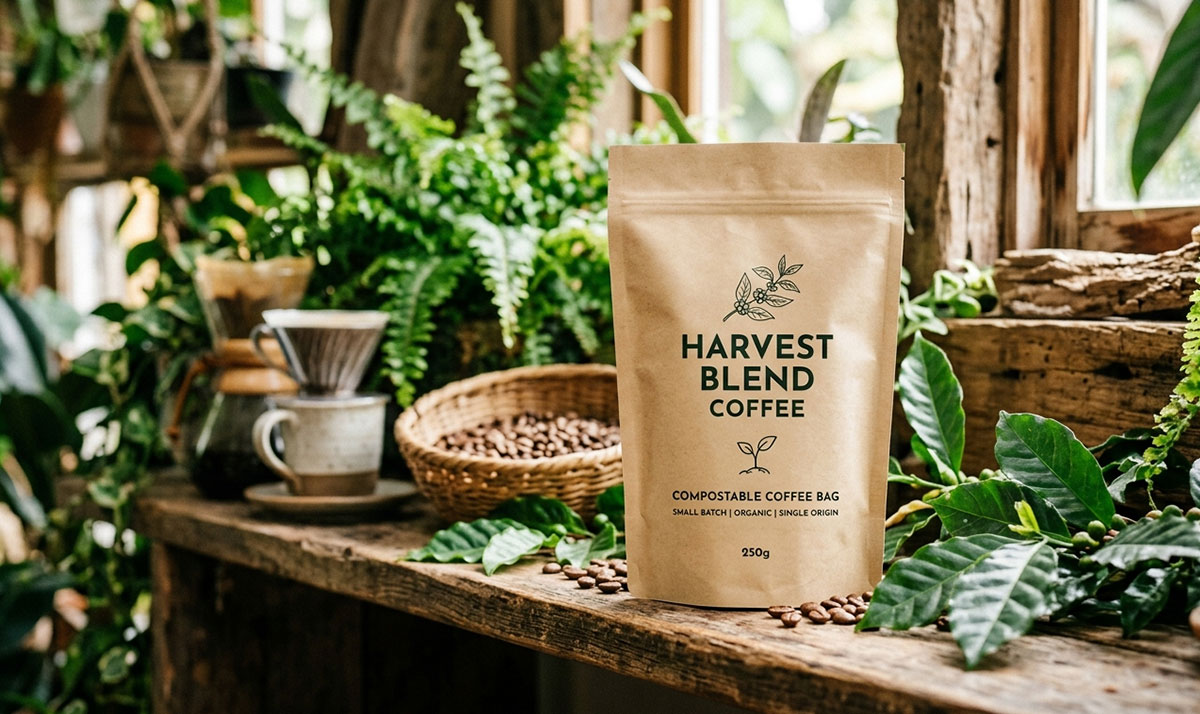
Switching to compostable coffee bags is not only a packaging upgrade. For coffee roasters and coffee brands, the bag still needs to do its first job well: protect the coffee.
Roasted coffee is sensitive to oxygen, moisture, light and aroma loss. Freshly roasted whole beans also release carbon dioxide after roasting, which is why many coffee bags need a one-way degassing valve. If the compostable structure is not selected correctly, the bag may look sustainable but fail in freshness, shelf life, sealing or shipping performance.
MSTPACK works with specialty coffee roasters, café brands, private label coffee companies and food brands to develop custom coffee packaging, including compostable coffee bags, recyclable coffee bags, flat bottom coffee bags, stand up coffee pouches, coffee bags with valve and roll stock film. This guide explains what coffee brands should check before switching to compostable coffee packaging.
What Are Compostable Coffee Bags?
Compostable coffee bags are flexible coffee packaging bags made with materials designed to break down under defined composting conditions. They are often selected by coffee brands that want packaging aligned with organic coffee, specialty coffee, ethical sourcing or low-waste brand positioning.
However, compostable coffee packaging is not a single standard product. A compostable pouch for dry snacks is not automatically suitable for roasted coffee. Coffee has its own packaging requirements, especially for aroma protection, oxygen barrier, moisture resistance and degassing control.
That is why coffee brands should evaluate compostable coffee bags as a complete packaging system, not just as a material choice.
Why Coffee Brands Are Considering Compostable Coffee Packaging
Many coffee brands are under pressure to improve packaging sustainability. Customers are more aware of plastic waste, and specialty coffee buyers often expect packaging to match the values behind the coffee itself.
For coffee roasters, compostable coffee bags can support:
- A stronger sustainability story
- Better alignment with organic or specialty coffee positioning
- A more natural shelf appearance
- Lower dependence on traditional plastic-based laminates
- Stronger appeal to eco-conscious consumers
- A clearer brand message for retail, cafés and online sales
But there is an important point: coffee customers may notice the sustainability claim first, but they judge the brand by the coffee experience after opening the bag. If the aroma is weak, the beans are stale, or the bag swells during shipping, the packaging has failed regardless of how sustainable it looks.
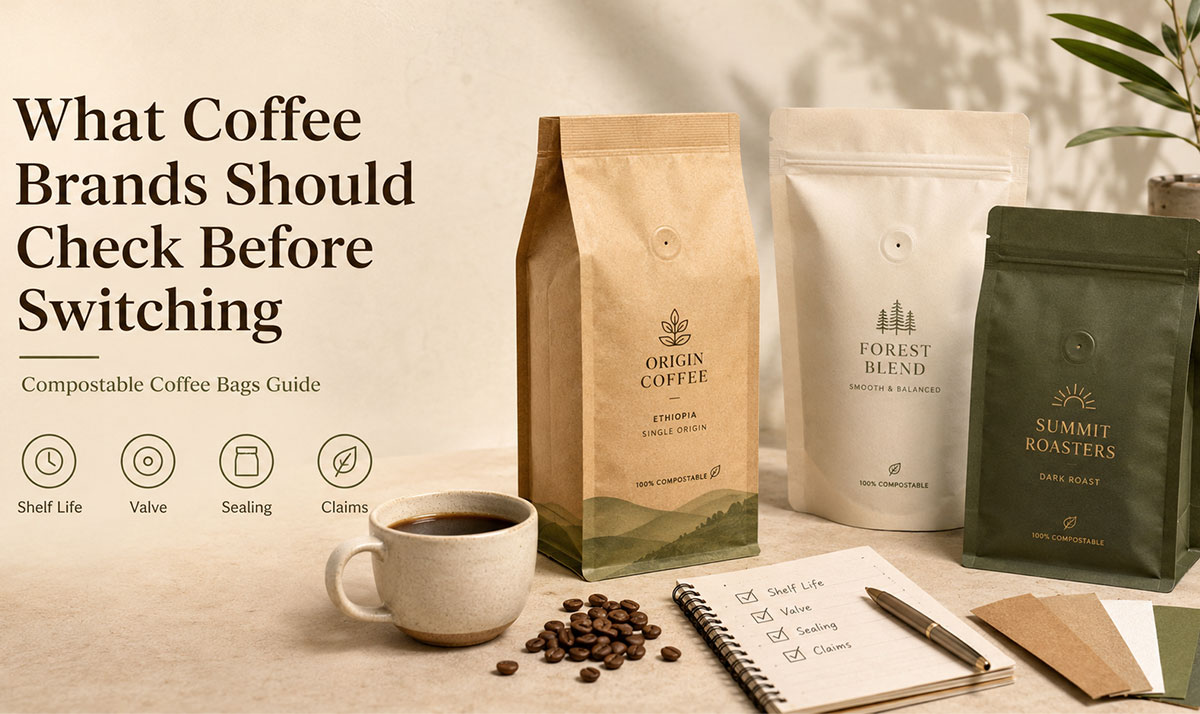
Compostable Coffee Bags vs Conventional Coffee Bags
| Factor | Conventional Coffee Bags | Compostable Coffee Bags |
| Main advantage | Mature barrier and stable production | Better fit for sustainability-focused brands |
| Common structure | Plastic or foil-based laminated film | Compostable film, paper-based or bio-based material |
| Barrier performance | Usually strong and predictable | Depends on selected structure |
| Degassing valve | Widely used | Available, but must match material and claim |
| Zipper | Mature and stable | Compostable or compatible zipper needs confirmation |
| Printing | Digital, flexo or gravure printing | Custom printing available, surface should be checked |
| Best use | Long shelf life, export, retail | Specialty coffee, organic coffee, sustainable brands |
| Key risk | Weaker sustainability message | Wrong structure may reduce freshness protection |
Compostable Coffee Bags by Coffee Type
Different coffee products need different compostable packaging structures. Before choosing a bag, coffee brands should consider coffee form, shelf life, valve requirement, filling method and sales channel.
Whole Bean Coffee
Whole bean coffee usually needs compostable coffee bags with a one-way degassing valve, especially when packed soon after roasting. Flat bottom bags and stand up pouches are common choices for specialty coffee, single origin coffee, espresso blends and café retail bags.
Ground Coffee
Ground coffee is more exposed to oxygen than whole beans, so the packaging should focus on aroma retention and barrier performance. Compostable stand up pouches or custom roll stock film are suitable for ground coffee, filter coffee, private label coffee and supermarket coffee lines.
Drip Coffee and Single Serve Coffee
Drip coffee and single serve coffee require small-format packaging with stable sealing and good aroma protection. Compostable sachets or roll stock film can be used for Japanese drip coffee bags, hotel coffee packs, gift sets, subscription samples and travel coffee.
Functional and Instant Coffee
Mushroom coffee, collagen coffee, protein coffee and instant coffee powders are more sensitive to moisture. Compostable stick packs, sachets or stand up pouches should be selected with moisture resistance, easy-tear design and reliable heat sealing.
What Coffee Brands Should Check Before Switching
Before switching to compostable coffee bags, coffee brands should not only compare appearance or material claims. The bag needs to match the coffee type, shelf life, filling process and sales market.
For MSTPACK, the safest way to switch is to start from the product requirement, not from the bag style. Coffee brands should first confirm coffee type, required shelf life, degassing needs, filling method and target market. Then the material structure, valve, zipper and printing method can be selected more accurately.
Before bulk production, MSTPACK recommends testing compostable coffee bags with real coffee under real filling and storage conditions. This helps check swelling, sealing strength, aroma protection and shelf appearance before the packaging enters the market.
Quick Decision Guide for Coffee Brands
Choose compostable coffee bags when:
- Your brand has a clear sustainability position
- Your customers understand and value compostable packaging
- Your shelf life requirement is realistic for the selected structure
- Your target market accepts the compostability claim
- You are ready to test sealing, valve and packed coffee performance
Consider recyclable coffee bags when:
- Your market has stronger recycling infrastructure
- You want a mono-material packaging direction
- You need a balance between barrier and recyclability
- Your brand wants to reduce complex laminated structures
Stay with conventional high barrier bags when:
- Long shelf life is the first priority
- Your coffee goes through long export distribution
- Compostable or recyclable options do not yet meet performance needs
- You are still testing sustainable packaging alternatives
FAQ About Compostable Coffee Bags
Are compostable coffee bags suitable for roasted coffee?
Yes. Compostable coffee bags can be suitable for roasted coffee if the material structure provides enough oxygen barrier, moisture resistance, seal strength and valve compatibility for the required shelf life.
Do compostable coffee bags need a degassing valve?
Freshly roasted whole bean coffee usually needs a one-way degassing valve because the beans continue to release carbon dioxide after roasting. The valve helps reduce bag swelling during storage and shipping.
Can compostable coffee bags be custom printed?
Yes. Compostable coffee bags can be custom printed with brand logo, origin, roast level, tasting notes, brewing guide, QR code and sustainability information.
Are kraft coffee bags compostable?
Not always. A kraft paper appearance does not mean the whole bag is compostable. The inner barrier layer, zipper, valve, adhesive and ink system should be checked before making a compostability claim.
What is the difference between compostable and biodegradable coffee bags?
Compostable packaging is designed to break down under specific composting conditions and standards. Biodegradable is a broader term and does not always provide a clear end-of-life requirement.
Are compostable coffee bags suitable for ground coffee?
They can be, but ground coffee needs stronger aroma and oxygen protection than whole beans. The barrier structure should be evaluated before switching.
Can compostable coffee bags have zippers?
Yes. Zipper options may be available depending on the bag structure and compostability requirement. Brands should confirm whether the zipper is included in the intended packaging claim.
What sizes are common for compostable coffee bags?
Common sizes include 250g, 12oz / 340g, 500g and 1kg. Smaller sachets and sample pouches are also available for drip coffee and single serve coffee products.
Are compostable coffee bags better than recyclable coffee bags?
Not always. Compostable and recyclable coffee bags support different sustainability strategies. The better choice depends on coffee type, shelf life, market infrastructure and brand communication.
How should a coffee brand switch to compostable coffee bags?
Start by confirming coffee type, shelf life, valve need, zipper requirement, printing design, certification target and packing method. Then request samples and test the bag with real coffee before mass production.
Compostable coffee bags can help coffee brands build a stronger sustainability position, but the switch should be made with technical checks, not only visual preference.
For coffee roasters, the right compostable coffee packaging should answer five questions:
- Can it protect aroma and freshness?
- Can it handle carbon dioxide release after roasting?
- Can it seal reliably during production?
- Can it support the brand’s sustainability claim honestly?
- Can it perform through storage, shipping and retail display?
When these questions are answered before production, compostable coffee packaging becomes more than a green label. It becomes a practical packaging upgrade that supports both product quality and brand trust.
MSTPACK helps coffee brands develop custom compostable coffee bags, compostable coffee bags with valve, compostable stand up pouches, compostable flat bottom coffee bags, coffee sachets and roll stock film for different coffee applications. Contact MSTPACK to Get Compostable Coffee Bag Recommendations.