

There are many types of sealing methods, including zipper sealing, one-way exhaust valve + sealing strip; magnetic sealing; press sealing, vacuum sealing, etc.; different sealing methods have different advantages and disadvantages; for example, like our common zipper sealing; there is a plastic zipper at the opening of the packaging bag, similar to the common ziplock bag, which can be opened and closed repeatedly. Her advantages are: simple operation, easy opening and closing, low cost, widely used in commercial and household packaging, and provide better short-term sealing effect.
If magnetic sealing is used; her characteristics are that the bag mouth is made of magnetic material, and it is tightly closed by magnetic adsorption.
Advantages: strong sealing, excellent moisture-proof and anti-oxidation effects. High-end appearance, suitable for brand premium products. Can be opened and closed repeatedly, good durability.
The vacuum sealed packaging bag is equipped with an air valve, which can be sealed after the air is extracted by the vacuum tool. Her advantages: minimize oxygen contact and have the best preservation effect. Suitable for long-term storage to prevent flavor loss.
So how do we choose the appropriate coffee packaging sealing method?
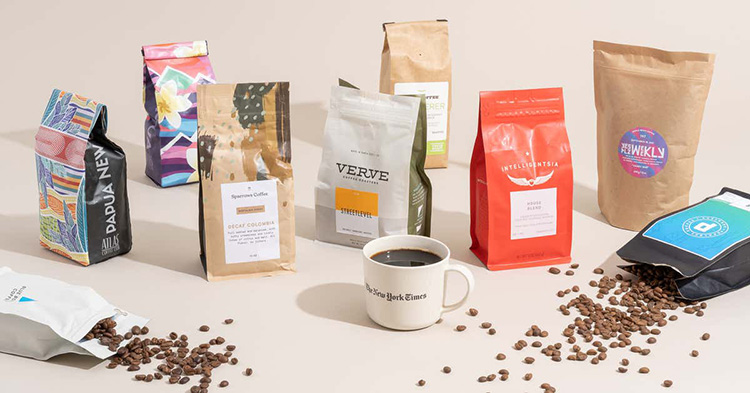
The sealing method of coffee packaging directly affects the preservation effect and user experience of coffee. From economical and practical zipper sealing to high-end magnetic sealing, different methods have their own advantages and disadvantages. We can choose the most suitable packaging type according to our needs (such as storage time, frequency of use, budget). For short-term home use, we can choose zipper sealing or press sealing; for freshly roasted coffee beans, one-way exhaust valve + sealing strip is usually selected; for long-term storage, screw cap sealing and vacuum sealing are more preferred.
If you need to know more about coffee packaging, please feel free to contact us!