
What Is Cold Seal Roll Stock?
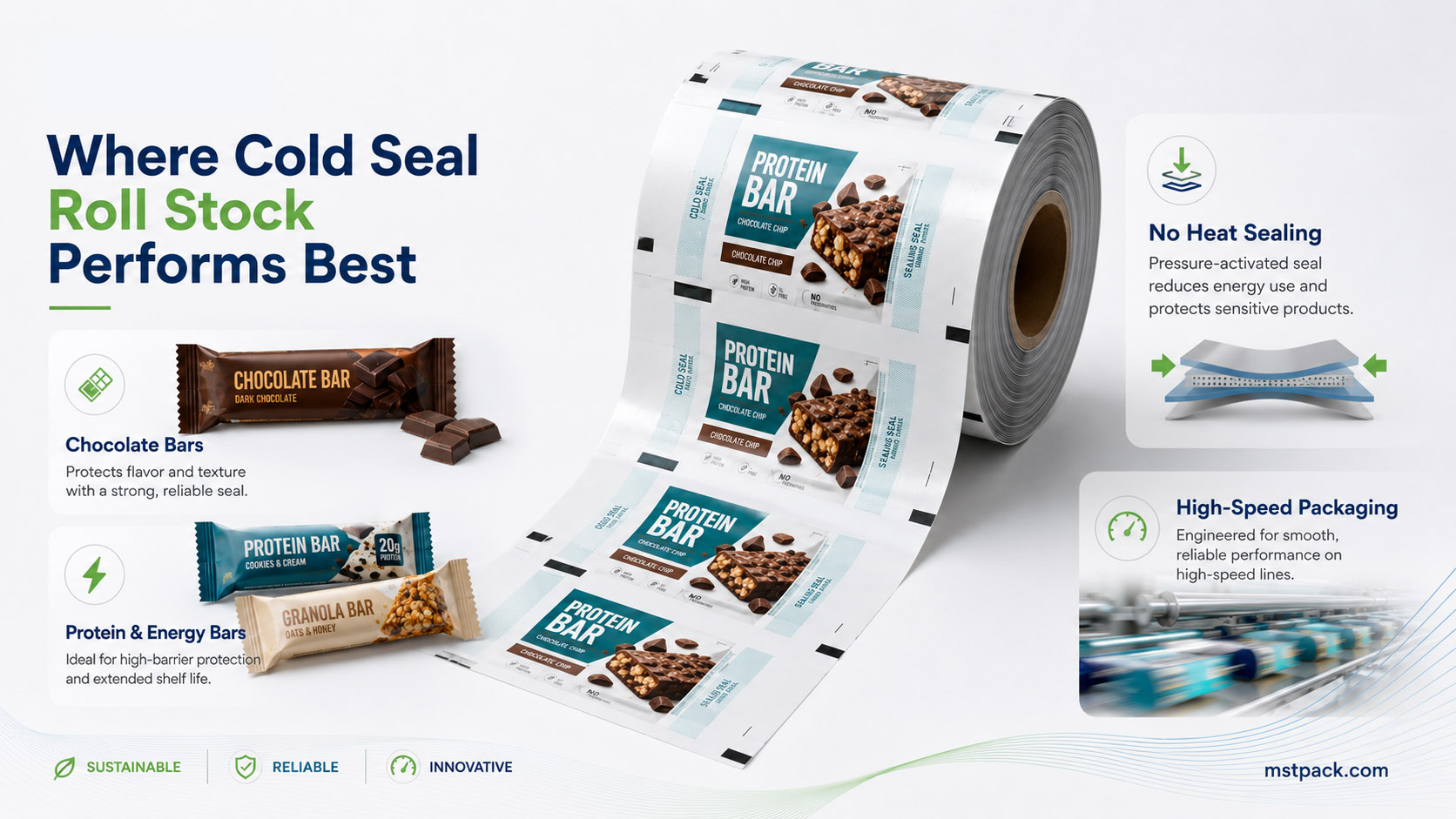
Cold seal roll stock is flexible packaging film supplied in roll form and coated with a cold seal adhesive in specific sealing areas. During packing, the film passes through a flow wrapping machine, and the coated surfaces seal together under pressure. The key difference is simple: cold seal packaging does not require heat to create the seal. Industry suppliers commonly describe cold seal film as a packaging material using water-based or pressure-activated coating that seals at room temperature or lower, making it suitable for products that may be affected by heat.
This makes cold seal roll film a strong fit for:
1. Chocolate bars
2. Protein bars
3. Energy bars
4. Granola bars
5. Candy and confectionery
6. Ice cream bars
7. Frozen desserts
8. Biscuits and snack bars
9. Individually wrapped food products
For high-volume snack production, roll stock format also supports automatic wrapping, continuous production and consistent packaging appearance.
Why Cold Seal Roll Is Gaining Market Attention?
The growth of cold seal packaging is closely connected with changes in the food and snack industry. Consumers are buying more portable, single-serve and on-the-go products, while brands are under pressure to improve packing speed, reduce product waste and maintain better product presentation.
Cold seal packaging answers these needs in several ways.
1. It Helps Protect Heat-Sensitive Products
Chocolate, coated snack bars and frozen products can be affected by heat during the sealing process. If too much heat is applied, the product surface may soften, deform or lose its intended appearance. Cold seal roll stock helps avoid this issue because sealing is created by pressure rather than heat. This is one of the main reasons cold seal packaging is widely used for chocolate bars, ice cream novelties, protein bars and other heat-sensitive foods. For premium snack brands, this matters because the final package must protect both the product and the brand image.
2. It Supports Faster Packaging Lines
Speed is another major advantage of cold seal packaging. Because the sealing process does not need heat-up time, packaging lines can run more efficiently compared with some heat seal applications. Packaging industry sources also note that cold seal technology is often chosen because it can improve production speed and reduce waiting time related to heated sealing systems. For manufacturers packing thousands or millions of bars, even small improvements in line speed can influence cost, output and delivery stability.
3. It Reduces the Risk of Heat-Related Waste
In heat seal packaging, unstable temperature control may cause poor sealing, film distortion or product damage. For heat-sensitive snacks, this can lead to rejected packs and higher production waste. Cold seal roll film helps reduce this risk by removing heat from the sealing step. When properly designed, the film structure, adhesive pattern and roll direction can support smooth machine performance and consistent sealing. For brands with strict cost control, this is not only a technical advantage. It can also support better production planning and more stable order fulfillment.
As chocolate, protein bar, energy bar and frozen snack categories continue to expand, cold seal roll film will remain an important packaging choice for brands that need both efficiency and product care.
Cold seal roll stock is gaining popularity because it solves a real packaging challenge: how to wrap heat-sensitive products quickly, cleanly and consistently.For chocolate bars, protein bars, energy bars, granola bars and frozen snacks, cold seal packaging film can help improve production efficiency, reduce heat damage and support attractive custom printing.If your brand is looking for custom cold seal roll stock, MSTPACK can help develop packaging film based on your product, machine and market requirements.
Contact MSTPACK to discuss your custom cold seal roll stock packaging project.