

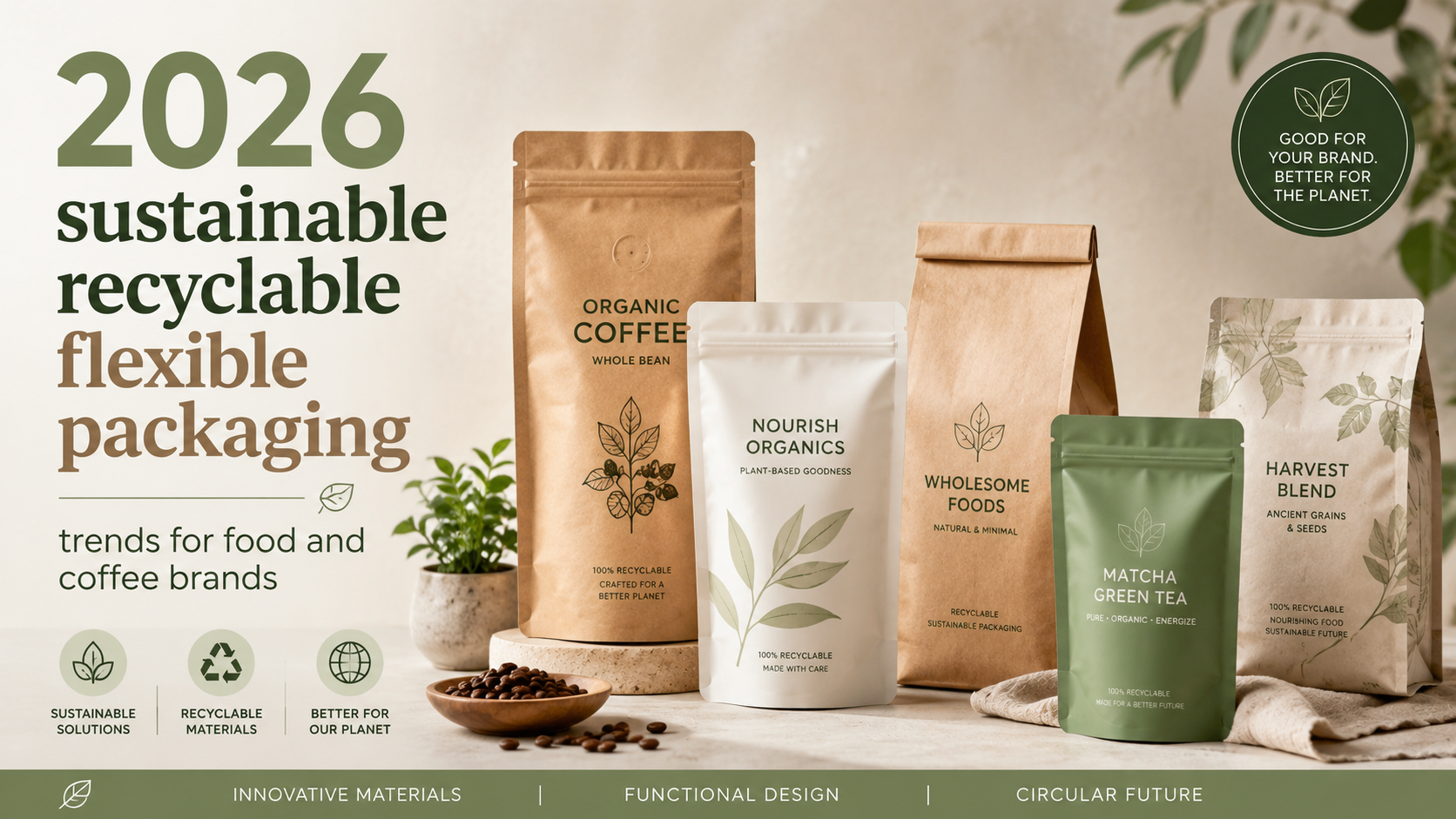
In 2026, sustainable packaging is becoming a business requirement rather than a marketing option. Stricter packaging regulations, growing demand for recyclable materials, consumer pressure, and cost concerns are pushing global food, coffee, pet food, and lifestyle brands to choose recyclable flexible packaging, mono-material pouches, lightweight packaging, and more transparent environmental claims.
The global packaging industry is changing quickly. In 2026, brands are no longer asking only whether packaging looks attractive. They are asking whether it is recyclable, compliant, lightweight, cost-effective, and suitable for long-term sustainability goals. According to Smithers, the global packaging market is forecast to reach USD 1.42 trillion by 2028, with sustainability, consumer behavior, regulation, and technology all influencing packaging demand.
For food brands, coffee roasters, pet food companies, supplement brands, and private-label businesses, packaging is becoming a key part of product strategy. It must protect the product, support brand value, and meet increasingly strict environmental expectations.
Packaging Regulations Are Becoming Stricter
One of the biggest changes in 2026 is regulation.The European Commission states that the new Packaging and Packaging Waste Regulation will begin to apply from mid-2026 and will replace the existing Packaging Waste Directive. The regulation applies to packaging and packaging waste across the EU market.
For companies selling into Europe, this means packaging design, recyclability, labeling, waste reduction, and producer responsibility will become more important. Brands will need clearer material structures, more accurate environmental claims, and packaging solutions that are easier to recycle.
For packaging buyers, this creates a simple but important question: Is our packaging ready for the next generation of environmental compliance?
Recyclable Flexible Packaging Is Gaining Momentum
Flexible packaging remains popular because it is lightweight, space-saving, customizable, and suitable for many product categories, including coffee, snacks, dried fruit, pet food, frozen food, and supplements.
However, traditional multi-layer flexible packaging can be difficult to recycle when several different materials are laminated together. This is why more brands are moving toward recyclable flexible packaging and simplified material structures. The Flexible Packaging Association notes that flexible packaging is lightweight and can provide source reduction, which is the top component of the U.S. EPA waste hierarchy.
For brands, recyclable flexible packaging offers several practical advantages:
1. Lower packaging weight
2. Less storage space
3. Strong shelf appeal
4. Custom printing options
5. Better sustainability positioning
6. Suitable formats for retail and e-commerce
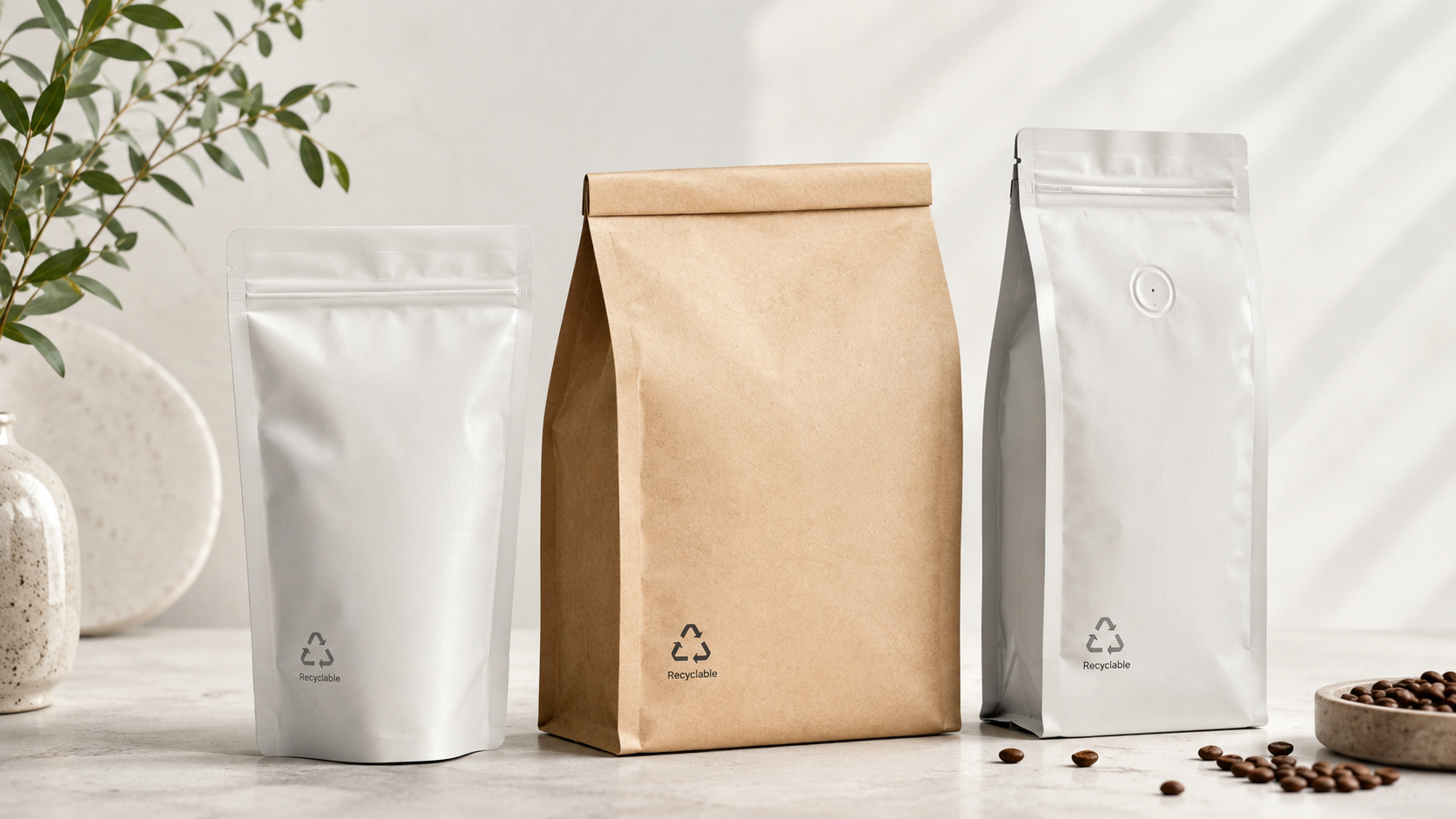
This makes recyclable stand-up pouches, recyclable flat bottom bags, and recyclable coffee bags important packaging options in 2026.
Consumers Still Care About Sustainable Packaging
Sustainability is not only a regulatory issue. It is also a consumer issue. McKinsey’s 2025 global consumer packaging research found that all surveyed regions include consumers who are willing to pay more for sustainable packaging, although the size of this group varies by market.
This means sustainable packaging can help brands improve market positioning, especially in premium food, specialty coffee, organic products, pet food, and health-related categories.
However, customers are also becoming more cautious. They do not only want packaging that says “eco-friendly.” They want packaging that clearly explains why it is more sustainable.
For example, instead of using a vague claim such as: Eco-friendly packaging; A stronger claim would be: Designed with a recyclable mono-material PE structure to support improved recyclability compared with conventional mixed-material laminates.
This type of statement is clearer, more credible, and easier for both customers and search engines to understand.
What Brands Should Look for in 2026 Packaging
When choosing packaging in 2026, brands should not focus only on price. They should evaluate whether the packaging can support product protection, sustainability, compliance, and brand growth. Important questions include:
1. Can the packaging protect the product? Coffee, nuts, dried fruit, pet food, supplements, and frozen food all require different barrier levels.
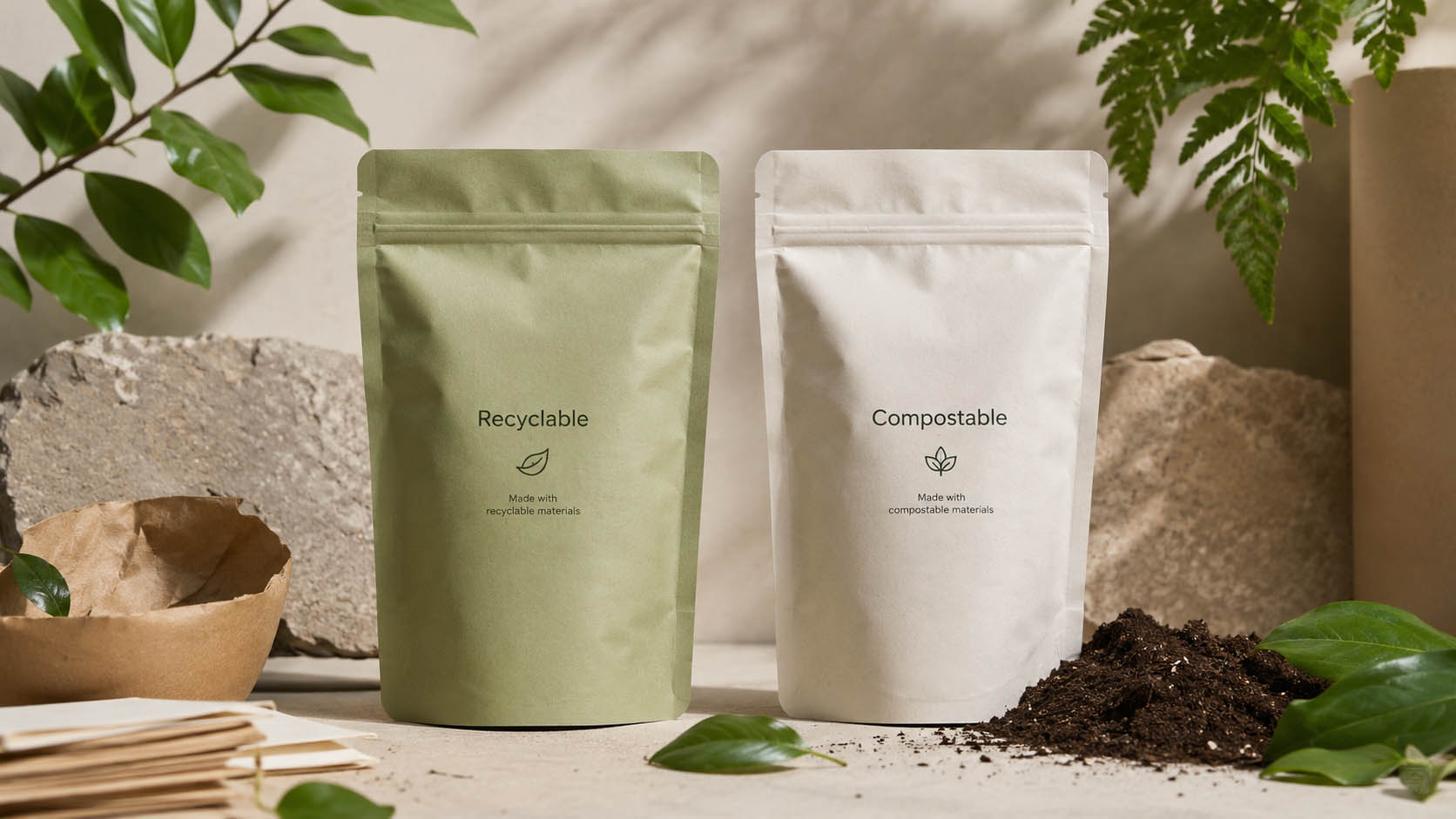
2. Is the packaging recyclable or compostable? The answer depends on the material structure and the recycling or composting system in the target market.
3. Is the environmental claim accurate? Clear and specific claims are more reliable than broad green marketing language.
4. Can the packaging improve brand value? High-quality printing, matte finishing, paper-touch effects, window designs, valves, zippers, and custom structures can all improve customer experience.
5. Can the supplier provide custom solutions? A professional packaging supplier should recommend suitable materials, bag types, printing finishes, and functional features based on the product.
The packaging industry in 2026 is becoming more sustainable, more regulated, and more performance-driven. For global food and coffee brands, packaging is no longer only about appearance. It is about product protection, recyclability, compliance, cost control, and consumer trust.Brands that choose recyclable, compostable, lightweight, and high-performance flexible packaging will be better prepared for future market changes.MSTPACK is ready to help global brands develop custom sustainable packaging solutions for 2026 and beyond.
FAQ
1. What are the key packaging industry trends in 2026?
The key trends include recyclable packaging, mono-material flexible packaging, stricter packaging regulations, sustainable coffee packaging, accurate environmental claims, lightweight packaging, and custom flexible packaging solutions.
2. Why is recyclable packaging important for brands?
Recyclable packaging helps brands respond to stricter regulations, reduce packaging waste, improve sustainability communication, and meet changing customer expectations.
3. What is mono-material packaging?
Mono-material packaging is packaging designed mainly from one material family, such as PE or PP. It can improve recyclability compared with traditional mixed-material laminated packaging.
4. Are recyclable coffee bags suitable for roasted coffee?
Yes. Recyclable coffee bags can be designed with barrier protection, zipper, valve, and custom printing to help protect coffee freshness while supporting sustainability goals.
5. How can MSTPACK help with sustainable packaging?
MSTPACK provides custom recyclable, compostable, and high-barrier flexible packaging solutions for coffee, food, pet food, supplements, dried fruit, snacks, and other product categories.