

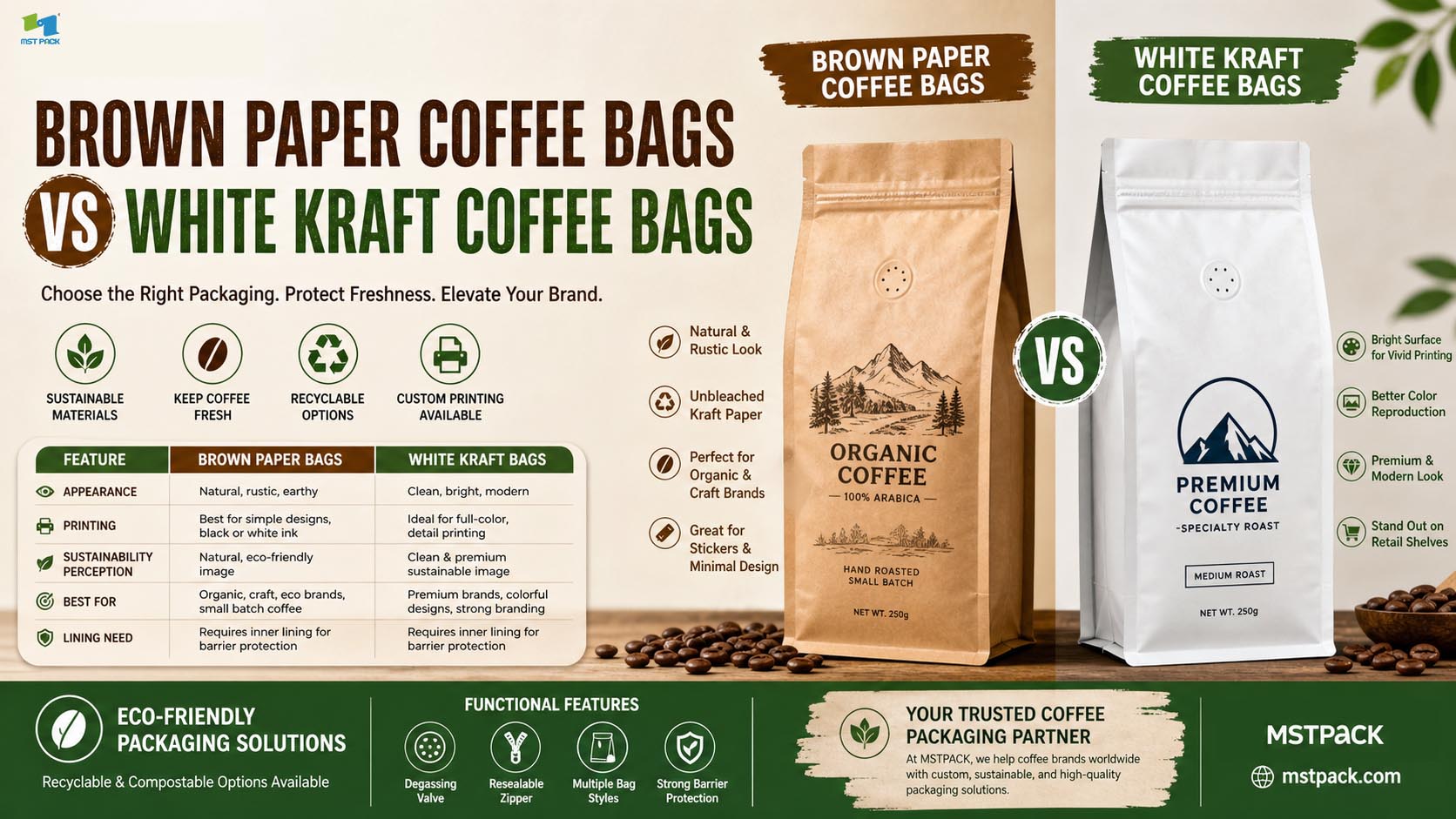
This guide explains the key differences between brown paper and white kraft paper coffee bags, helping coffee businesses choose the right packaging for branding, freshness protection, and environmental positioning.
What Are Brown Paper Coffee Bags?
Brown paper coffee bags are usually made with unbleached kraft paper. Because the paper keeps its natural brown color, it gives the packaging a raw, organic, and earthy appearance. This makes it especially popular for coffee brands that want to communicate simplicity, sustainability, craft roasting, or natural sourcing.
The natural texture of brown paper makes the packaging look warm and authentic. For coffee roasters, this can help build a stronger connection with customers who prefer sustainable, small-batch, or artisan-style products.
What Are White Kraft Paper Coffee Bags?
White kraft paper coffee bags are made from kraft paper that has been processed to create a clean white surface. Compared with brown paper, white kraft paper offers a brighter background for printing, which makes it easier to display detailed logos, vivid colors, product images, and premium branding elements.
For coffee brands with strong visual identity systems, white kraft paper can make the packaging look more polished and consistent across different product lines.
Brown Paper vs White Kraft Paper: Main Differences
Although both materials come from kraft paper, their appearance, branding effect, and sustainability perception are different.
1. Appearance and Brand Feeling
The most obvious difference is visual style.
Brown paper coffee bags create a natural, rustic, and eco-friendly look. They are ideal for brands that want to highlight organic coffee, sustainable sourcing, handmade roasting, or environmentally responsible packaging.
White kraft paper coffee bags look cleaner and more refined. They are suitable for brands that need a brighter printing surface or a more modern retail presentation.
In simple terms:
Brown paper = natural, organic, handmade, eco-conscious
White kraft paper = clean, premium, modern, brand-focused
2. Printing Performance
Printing on brown paper has a unique visual effect. Because the base color is darker, printed colors may appear softer or more muted. This is not a disadvantage if the brand wants a natural and understated style.
Brown paper works well with:
1. Black printing
2. White ink printing
3. Earth-tone color palettes
4. Simple logo designs
5. Stickers and labels
6. Minimalist product information
White kraft paper provides a brighter surface, so it is better for colorful designs, complex artwork, and accurate brand color reproduction.
White kraft paper works well with:
1. Full-color printing
2. Premium logo design
3. High-contrast graphics
4. Detailed illustrations
5. Modern product lines
6. Retail shelf branding
If your packaging relies heavily on bright colors and detailed design, white kraft paper may be more suitable. If your brand focuses on natural texture and eco-friendly storytelling, brown paper coffee bags are often the better choice.
3. Sustainability Perception
Many coffee customers naturally associate brown paper packaging with eco-friendly values. Because brown kraft paper is unbleached, it usually has a more natural appearance and may require less chemical processing than white paper.
This makes brown paper packaging a strong option for brands that want to communicate:
1. Natural materials
2. Plastic reduction
3. Eco-conscious packaging
4. Organic coffee positioning
5. Responsible sourcing
6. Low-impact brand image
However, it is important to understand that the sustainability of a coffee bag depends not only on the outer paper layer. The inner barrier material, zipper, valve, ink, adhesive, and disposal method all affect the final environmental performance.
A brown paper coffee bag may look sustainable, but it still needs the right structure to protect coffee and support recycling or composting goals.
How to Choose Between Brown Paper and White Kraft Coffee Bags?
Before selecting the material, coffee brands should consider five practical factors.
1. Brand Positioning
If your brand story is about nature, sustainability, handmade roasting, or organic coffee, brown paper coffee bags can strengthen that message.
If your brand is more premium, modern, colorful, or design-driven, white kraft paper may be more suitable.
2. Printing Design
Brown paper is best for simple, natural, and low-saturation designs. White kraft paper is better for vivid printing, complex graphics, and accurate brand colors.
3. Shelf Life Requirement
For coffee with longer shelf life or export requirements, the inner barrier is more important than the paper color. Make sure the bag structure can protect aroma and freshness.
4. Sustainability Goal
Do you want recyclable, compostable, plastic-reduced, or paper-based packaging? Each goal requires a different material structure. The outer paper layer is only one part of the solution.
5. Target Market
Different markets have different recycling systems, composting standards, and packaging expectations. Coffee brands selling to Europe, North America, Australia, or the Middle East may need different packaging structures and labeling instructions.
Both brown paper coffee bags and white kraft paper coffee bags are useful for coffee packaging, but they serve different brand goals.
Choose brown paper coffee bags if you want a natural, rustic, eco-conscious, and organic appearance. Choose white kraft paper coffee bags if your brand needs a cleaner surface for colorful printing and premium shelf presentation.