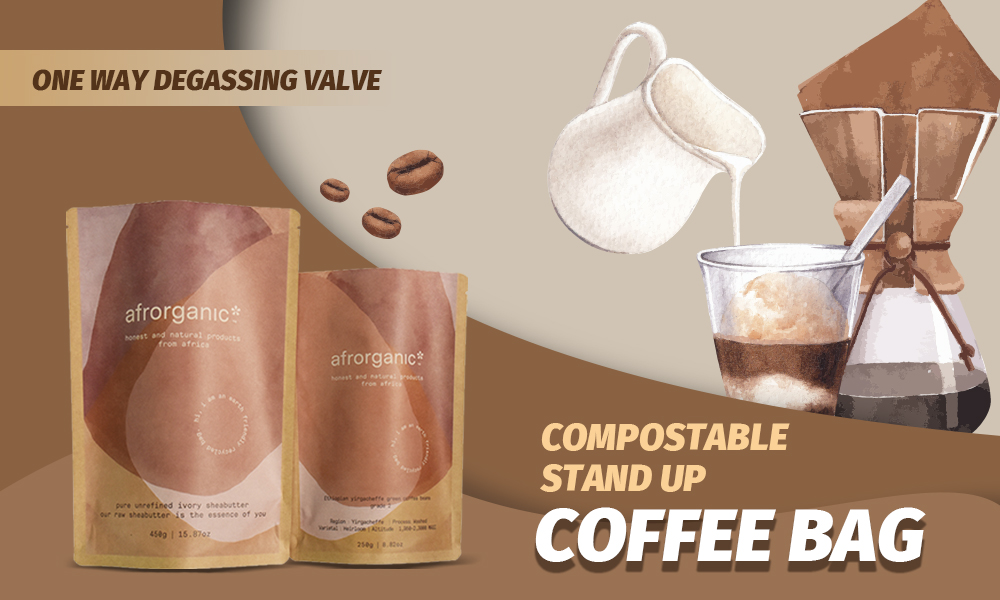
In terms of consumption patterns, the consumption of freshly ground coffee is growing rapidly, and more and more consumers pay more attention to the quality and flavor of coffee. This forces many coffee roasters to pay attention to coffee packaging so that the coffee beans maintain their original flavor. This article will describe in detail how to choose the right coffee bean packaging.
How to store coffee beans?
Different types of coffee beans require different types of coffee packaging;
1. Green bean export packaging: Different coffee producing countries in the world usually use 70 kg or 69 kg sacks (only Hawaiian coffee is packaged in 100 pounds) when exporting coffee beans. In addition to the name of the country and its coffee organization, coffee production unit, and production area, the coffee sacks are also printed with the most typical patterns of their own country, which has certain cultural characteristics.
Roasted coffee beans are usually packaged in the following ways.
1. Non-airtight packaging: It can be used as a temporary packaging for short-term storage. This packaging method is generally used in roasting plants, which can be quickly supplied and consumed, and can simply isolate the effects of moisture, flavor loss and light on coffee beans. However, due to long-term contact with air, coffee beans are easily oxidized and have a short taste period.
2. Vacuum packaging: The roasted coffee beans need to be placed for a period of time before vacuuming and sealing to prevent carbon dioxide from damaging the packaging bag. This type of packaging can generally be stored for about 10 weeks.
3. One-way valve packaging: Add a one-way valve to the packaging bag to allow the carbon dioxide produced in the bag to be discharged, but block the entry of external gas, ensuring that the coffee beans are not oxidized, but cannot prevent the loss of aroma. This type of packaging can be stored for up to 6 months.
4. Pressurized packaging: The coffee beans are quickly vacuum-packed after roasting, and then filled with inert gas to seal. This packaging method can ensure that the coffee beans are not oxidized, while ensuring that the aroma will not be lost, and has sufficient strength to ensure that the packaging will not be damaged by air pressure. It can be stored for up to two years.
How to choose the right coffee bean packaging?
The main considerations for preserving coffee beans are its sealing and moisture resistance.
Good sealing is the key. Choose packaging with a one-way valve, which allows the coffee beans to release carbon dioxide after roasting while preventing oxygen, moisture and odor from entering. For example, aluminum foil bags with high-quality one-way valves can effectively maintain the freshness of coffee beans, prevent oxidation reactions, and extend the flavor life of coffee beans. For coffee beans that need to be stored for a long time, consider pressurized packaging. By filling inert gas (such as nitrogen) and sealing, an oxygen-free environment is created for the coffee beans, which greatly slows down the oxidation process and can be stored for up to two years.
Coffee beans easily absorb moisture from the air, causing deterioration and loss of flavor. Choose packaging materials with moisture-proof properties, such as aluminum foil bags or composite bags, which can effectively block the intrusion of moisture. For example, some high-quality aluminum foil composite bags, the inner aluminum foil layer can form a moisture-proof barrier to ensure that the coffee beans are always dry. Check whether the sealed edges of the package are firm and there are no gaps to prevent moisture from seeping in from the edges. You can gently squeeze the package to feel whether there are signs of air leakage or moisture.
For more information on coffee bag packaging, please feel free to contact us.